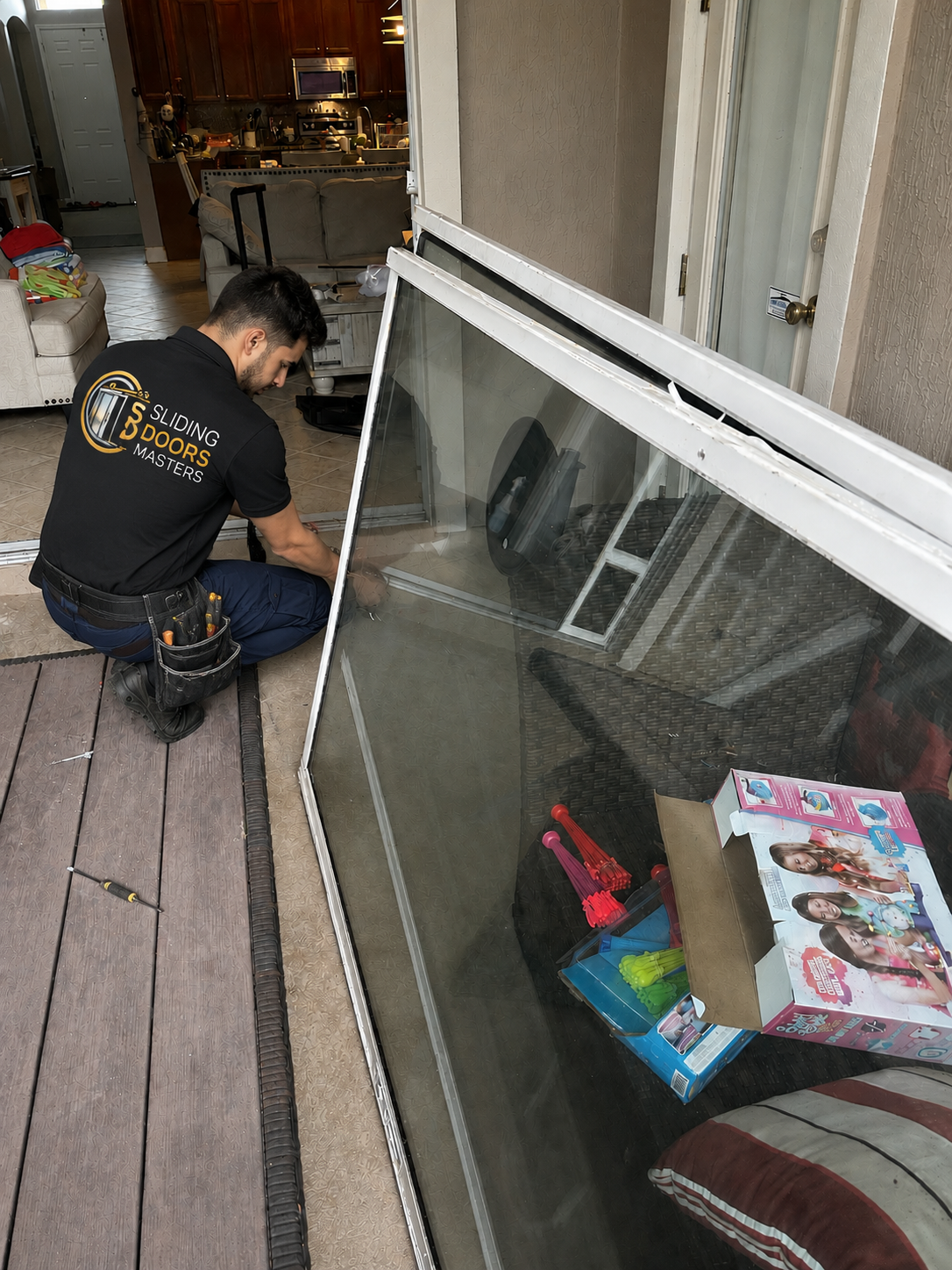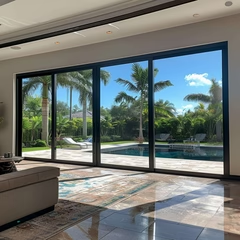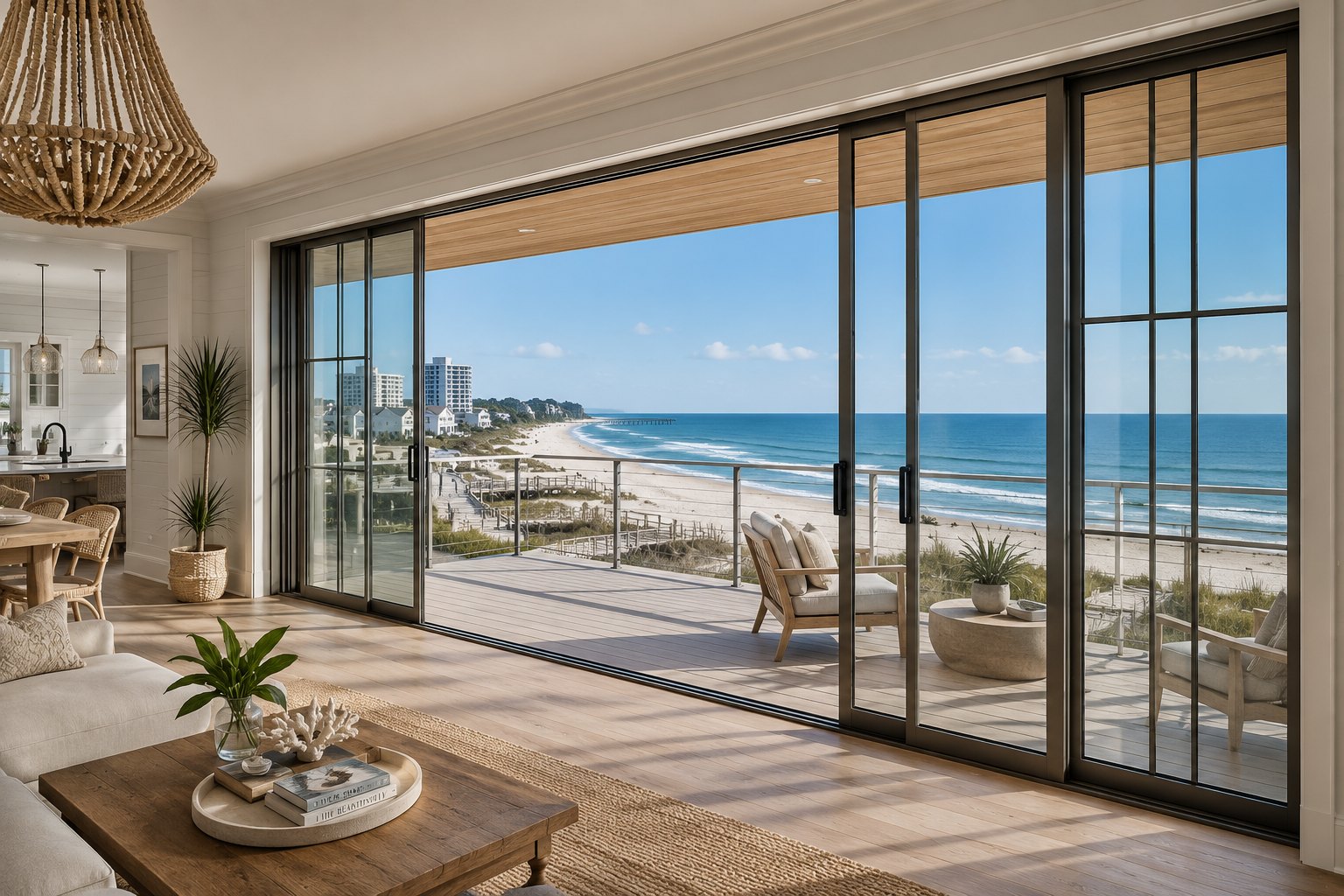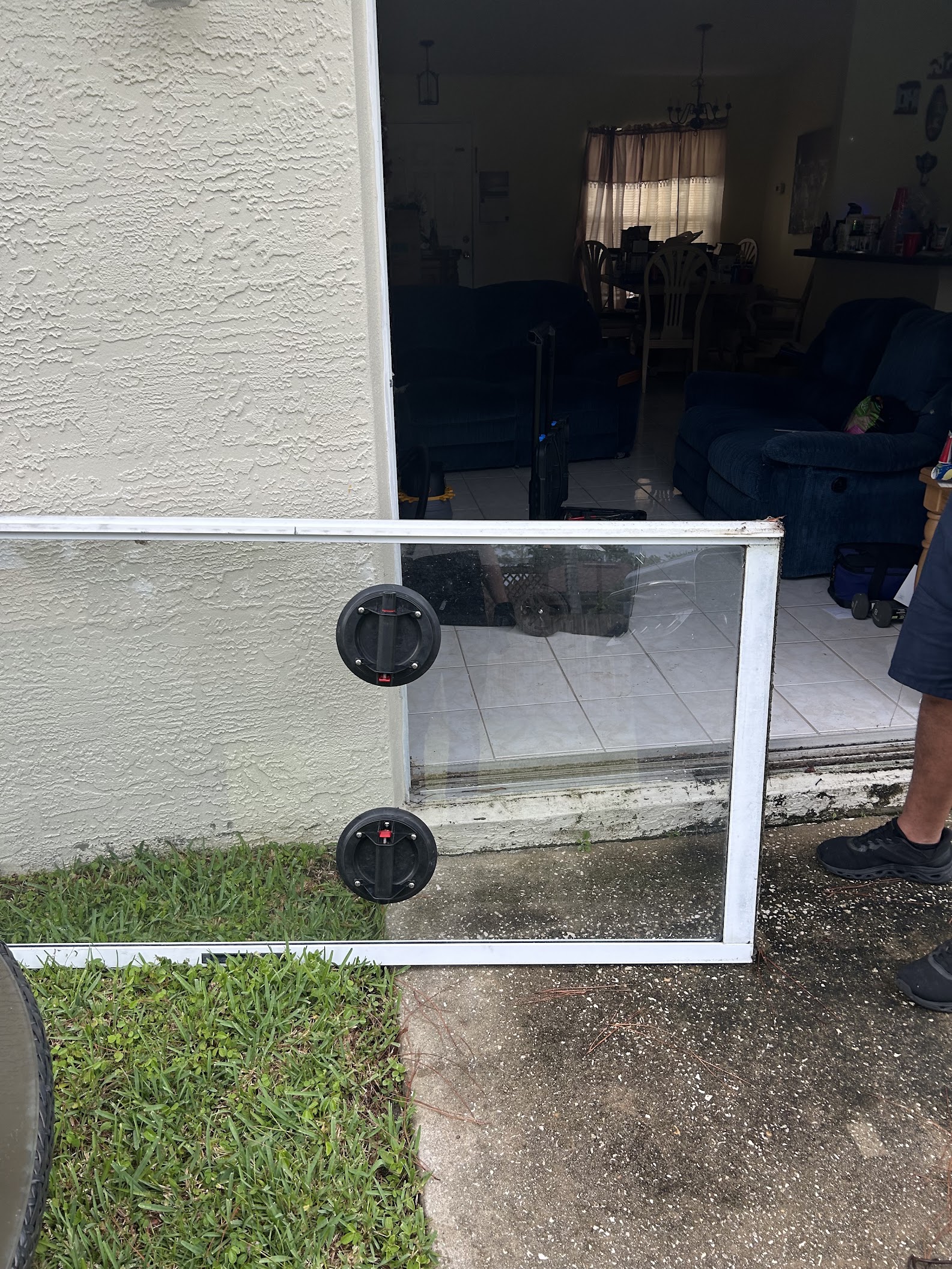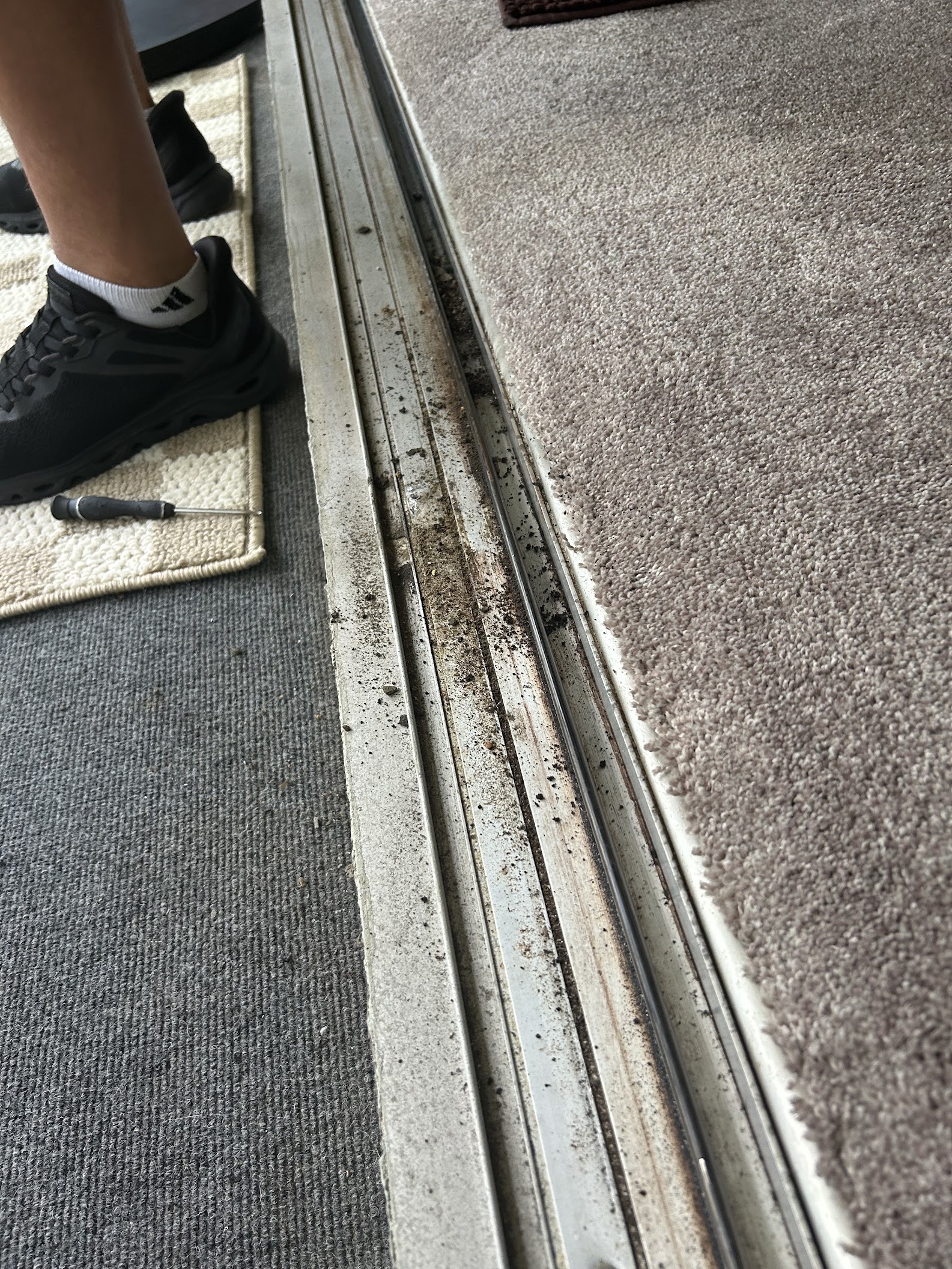
An older aluminum sliding door may be restorable when its frame, panel, mounting areas and glazing remain suitable for compatible repairs. Age and surface discoloration do not automatically require replacement. Deep material loss, distortion or unsupported attachment can change the scope. Decide whether you want mechanical restoration, appearance work or different documented performance.
Define what restoration means to you
Restoring movement is different from changing appearance, thermal performance or documented storm protection. Be clear about the goal before comparing proposals.
A hardware repair may keep existing glass and framing in use. It does not automatically improve their original performance ratings. A cosmetic cleaning may improve appearance without addressing a damaged rail.
| Goal | Assessment needed |
|---|---|
| Easier movement | Rollers, running surface, guides and alignment |
| Dependable locking | Lock, receiver, mounting support and panel position |
| Clearer view | Surface condition versus the glass unit itself |
| Reduced draft | Seal condition, contact and installation details |
| New appearance | Finish compatibility and scope beyond mechanics |
| Different rated performance | Suitable documented product/configuration and installation |
Inspect the load-bearing areas first
Examine the rail, frame support, attachment areas and the panel that holds the glass. Surface discoloration is different from deep pitting, cracking or missing material.
An appropriate repair should not rely on weakened material remaining hidden beneath a cap or trim piece. Ask the technician to show why the support is suitable.
If the opening is distorted or unstable, that condition may require broader work before new hardware can produce a lasting result.
Identify the existing parts carefully
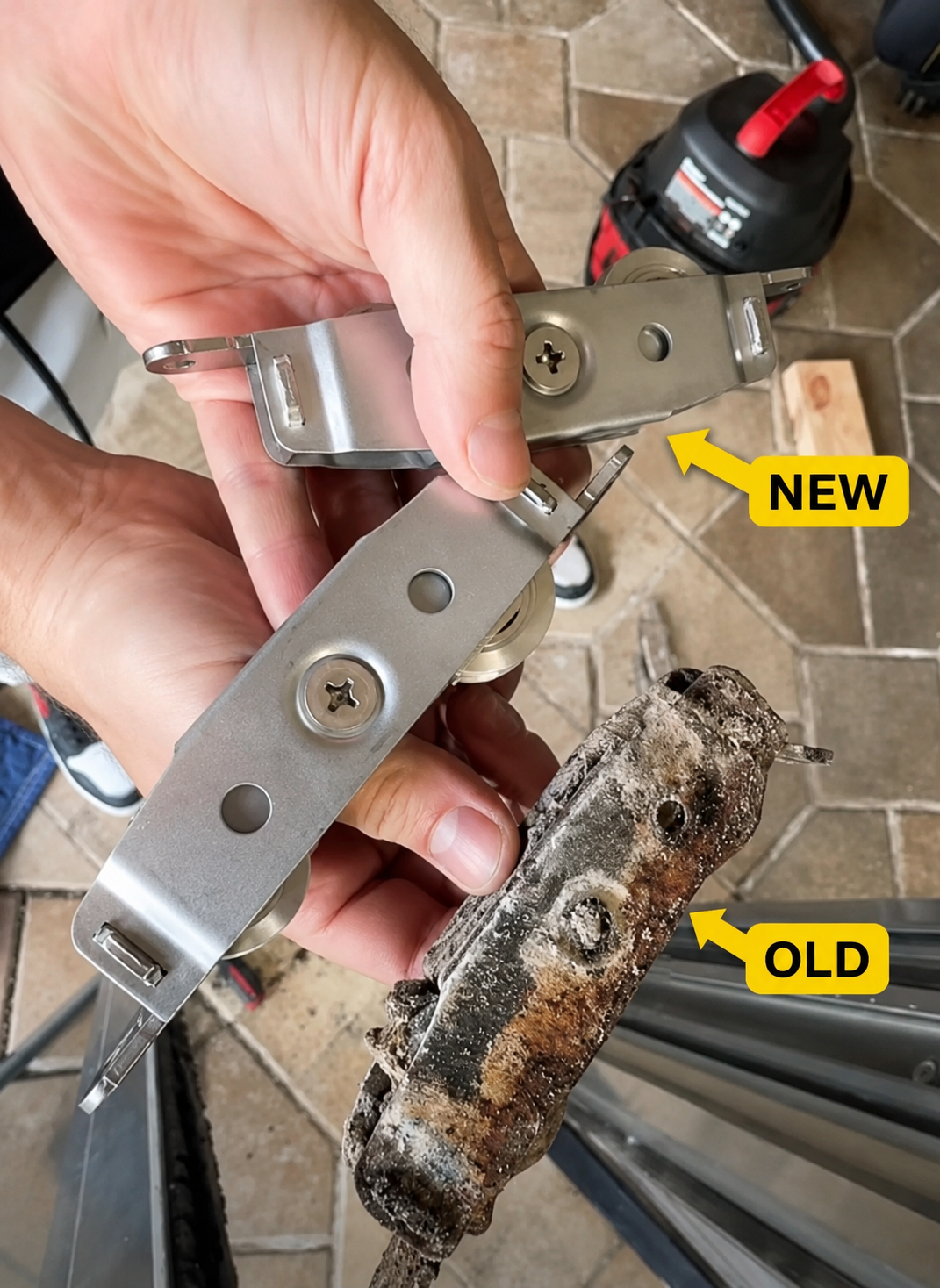
Older assemblies can be difficult to match when labels are gone or earlier repairs changed the original hardware. Dimensions, mounting features, adjustment direction and rail contact matter.
Do not assume a similar-looking part is suitable because it can be pushed into the cavity. Modifying the panel to accept a convenient substitute deserves a clear technical explanation.
Ask what has been identified, what remains uncertain and whether an appropriate replacement can be sourced. Difficulty finding a part is not immediate proof that the complete door is beyond repair.
Keep finish work separate from mechanical work
Aggressive cleaners, abrasives and incompatible coatings can damage aluminum finishes or adjacent materials. Use product-specific guidance before cleaning or refinishing.
Paint on weatherstripping, running surfaces or moving interfaces may create new resistance. A shiny rail is not necessarily the correct wheel profile.
If appearance work is part of the project, describe its scope separately and confirm how functional areas will be protected.
Consider glass and installation condition
A restoration proposal should note cracked glass, persistent between-pane haze or incompatible previous glazing. Repairing rollers while ignoring a glazing concern does not resolve the whole condition.
Likewise, recurring leakage or frame-position problems can extend beyond ordinary hardware work. Ask whether the repair addresses those findings or whether another assessment is needed.
For patio door repair in Avondale, provide photographs of the whole opening and any identifying marks. Avoid estimating the door's remaining lifespan from age alone.
Decide from a supportable scope
A useful restoration proposal explains the parts, rail work, adjustment, final tests and warranty terms. A replacement proposal should explain why the existing system cannot reasonably achieve your goals.
Compare complete scopes. Keeping a sound opening can be practical; repeatedly repairing unsupported damage can be poor value.
Write separate goals for mechanics and appearance
A homeowner may want the door to move easily while another wants a different frame color and updated glazing. A roller repair can address the first goal without delivering the second. Separate the requested results before comparing restoration with a full replacement project.
Ask the inspection to identify the rail and mounting areas the repair will depend on. On an older unit with missing labels, also ask what part identification remains necessary. A vague promise to "make it like new" does not explain either issue.
The parts-identification guide describes the available evidence. Keep cosmetic work, compatible hardware and any broader installation correction distinct in the written scope.
Reference: Marvin care and maintenance guidance. Apply compatible finish care to covered products; age alone does not establish the condition of an aluminum opening.
Older-door questions
Does pitting mean the frame must be replaced?
The depth and location matter. A superficial condition differs from damage that compromises support, attachment or the intended running surface.
Can restoration make an old unit impact-approved?
Not automatically. Rated performance depends on a specified complete system and suitable installation.
Should the door look new after roller repair?
Mechanical repair can improve operation while leaving normal cosmetic age. Agree separately on any finish or appearance work.
Request an older-door restoration evaluation. Tell Sliding Doors Masters your ZIP and which mechanical or appearance improvements matter. Include whole-opening photos, missing-label concerns and previous repair information.
Need this looked at on your own door? Get a free estimate or talk it through with our team.
Related service