Choose a replacement sliding door by the actual opening, usable passage, intended operation, documented performance and complete installation scope. Compare ratings for the proposed frame-and-glass configuration rather than a similar showroom unit. Include removal, surrounding support, finishes, applicable local process and future service records in the project discussion.
Match the actual opening and goals
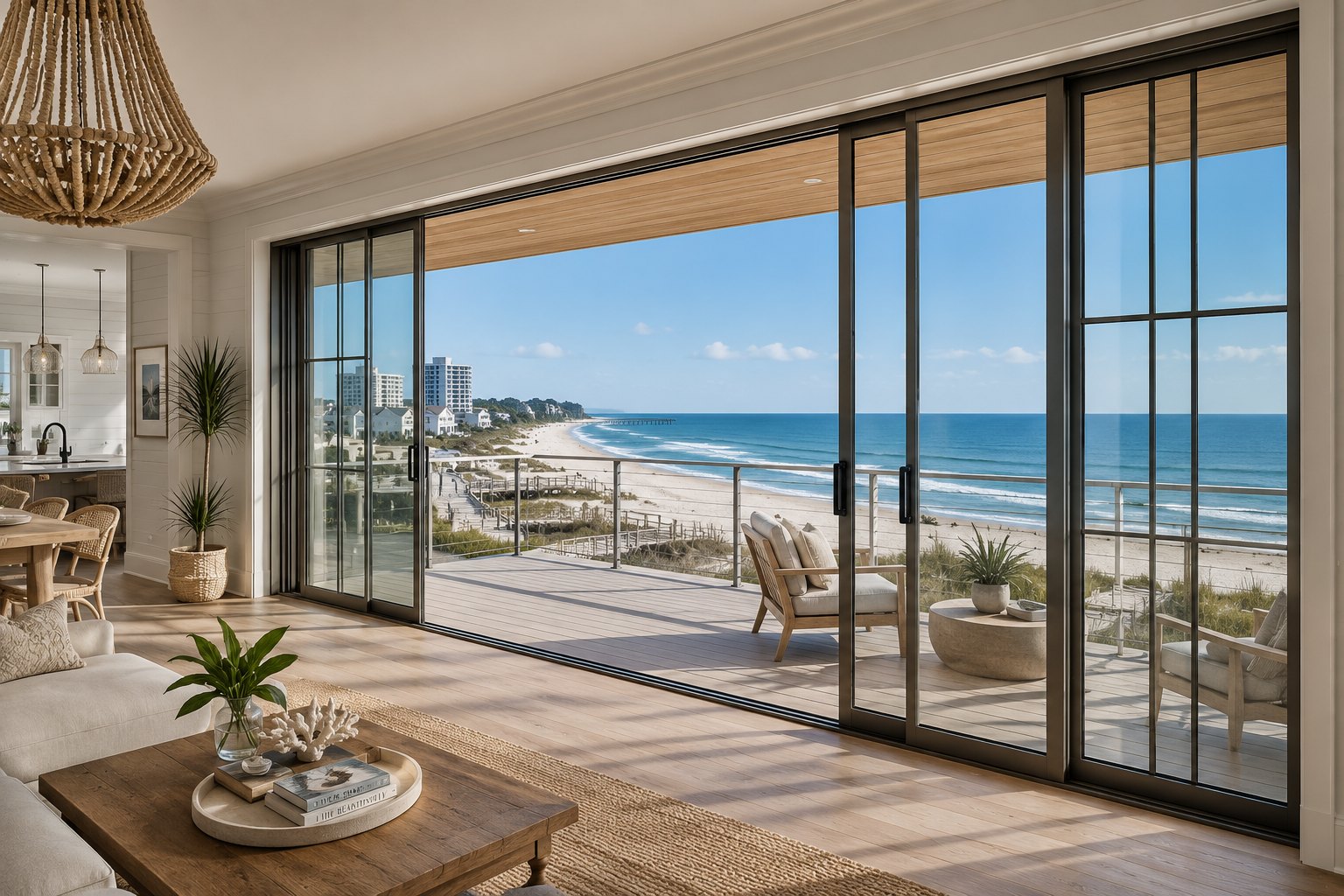
Discuss panel arrangement, usable opening, threshold, handle placement and the normal operating sequence. A wider-looking system may not provide the passage or daily use you expect.
For large panels, ask how the intended mechanism and hardware support convenient operation. Appearance alone does not indicate the effort or sequence involved.
Do not assume the existing rough opening, frame position or surrounding support is suitable without assessment.
Compare documented performance separately
| Specification | What to compare |
|---|---|
| Wind and impact information | The actual approved product/configuration and intended installation |
| Energy performance | Ratings for the actual frame and glazing combination |
| Operation | Intended panel sequence, mechanism and usable effort |
| Water management | Product details and installation scope |
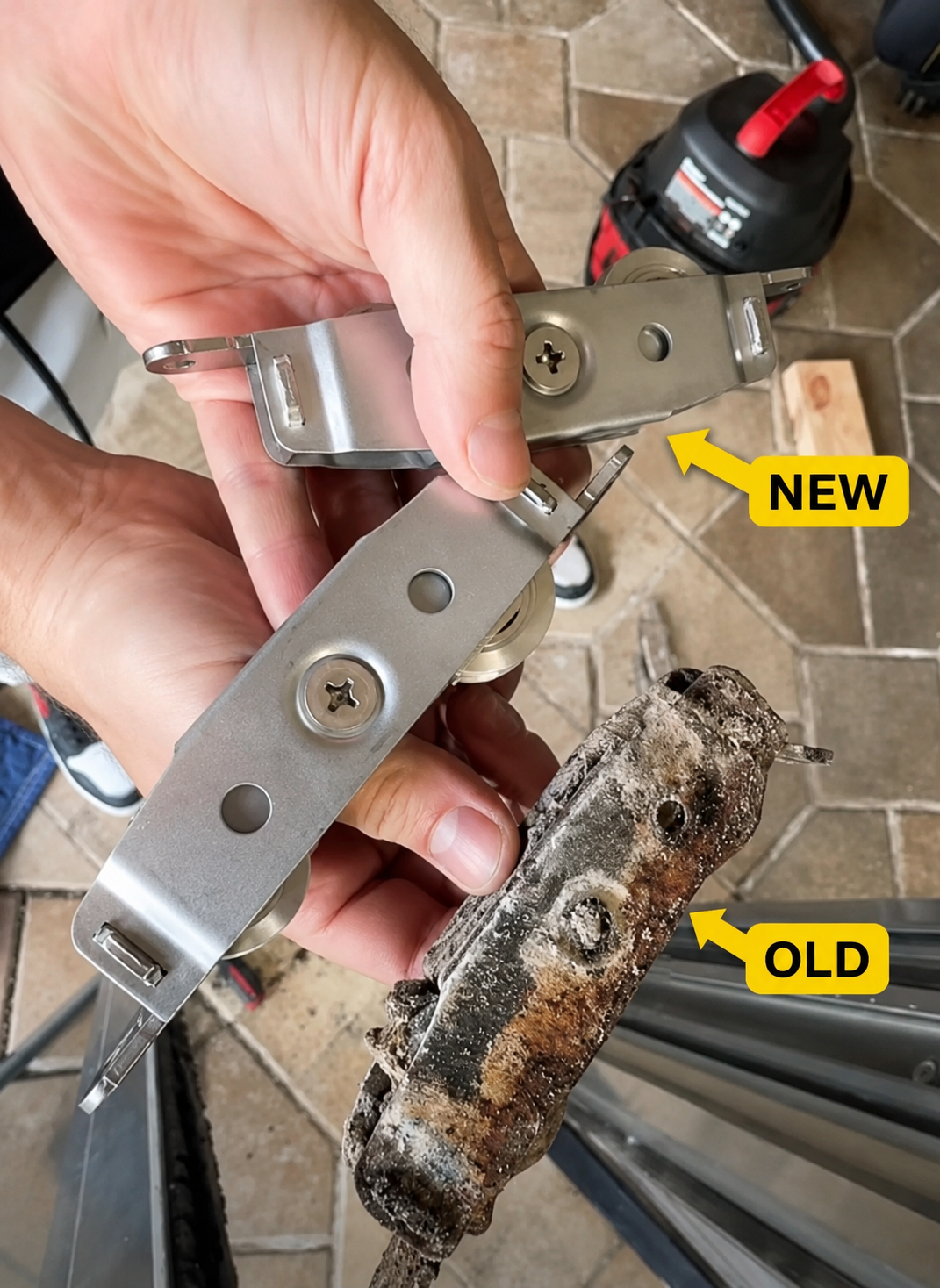
| Hardware | Compatible function, finish and serviceability |
| Warranty | Actual coverage and conditions |
An energy label and an impact approval answer different questions. A product name, thick glass or marketing badge cannot replace the relevant documents.
Understand the energy terms
U-factor describes heat transfer through the product. Solar heat gain coefficient describes solar heat admitted by the configuration. Compare those values for the actual door, not an unrelated sample model.
The usefulness of a specification depends on climate and the room's conditions. Orientation, shading, installation and the home's heating or cooling system also affect the outcome.
Avoid a guaranteed percentage reduction in utility bills based on a catalog rating. Ask how the proposed unit addresses your particular comfort goals.
Treat impact protection as a system
The frame, glazing, panel configuration, hardware and attachment can all be part of an approved assembly. A different pane alone does not establish the new system's performance.
Ask the installer to identify the proposed product and supporting documents. Confirm that the configuration and installation suit the requirements for the property.
The appropriate building authority should determine address- and scope-specific requirements. The City of Jacksonville's current replacement documentation calls for product and approval details; nearby municipalities may have their own processes.
Include the surrounding work
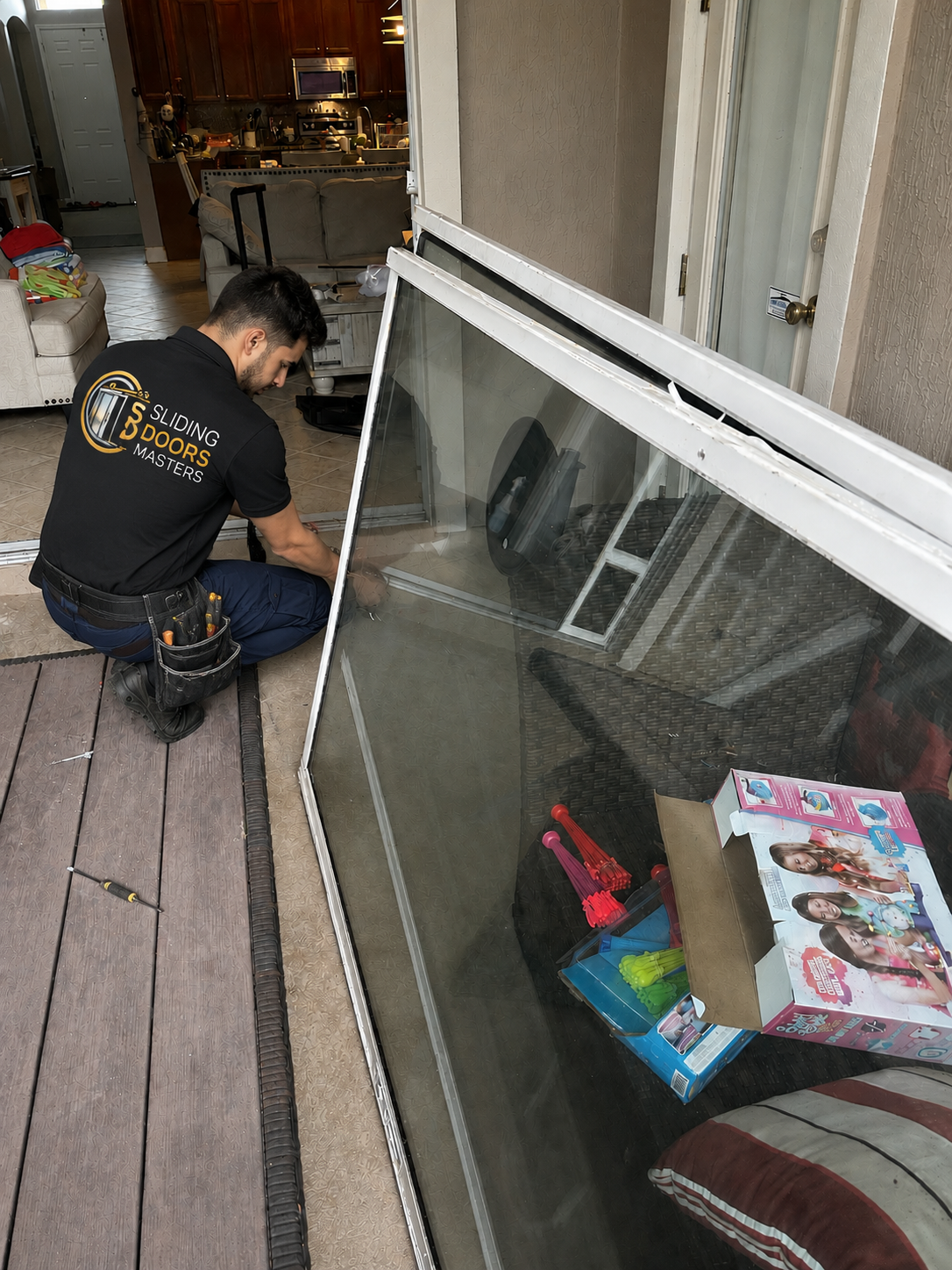
A complete estimate should explain removal, disposal, substrate assessment, installation, relevant finishes and any required inspection process.
Ask what happens if removal reveals damage around the opening. The provider should explain additional findings and obtain approval for changes in scope and price before further work.
Comparing only the retail cost of two units can leave these project costs invisible.
Consider future service
Ask how hardware is identified and maintained, what records will be supplied and which warranty terms apply. A door should not be chosen solely because a replacement part looks inexpensive online.
Keep manufacturer, model, configuration, approval and care information together after installation. It helps future repairs remain compatible with the installed system.
For patio door installation in Jacksonville, explain both the current condition and what you want the new opening to accomplish.
Review before final acceptance
Check the intended panel sequence, full normal travel, closing, locking and the screen if included. Review supplied records and remaining finish work.
A new unit should be evaluated as a completed installation, not just a product delivered to the home.
Build a comparison for the exact options being proposed
For each candidate, record manufacturer, model, panel arrangement, usable passage, operating sequence, energy information, any applicable approval documents and included installation work. Compare those fields for the proposed sizes and configurations.
A catalog benefit for another configuration does not automatically belong to yours. Neither does a retail unit price explain removal, substrate correction or finish restoration. Ask how concealed findings will change the scope and be approved.
For Jacksonville and nearby beach municipalities, confirm which authority handles the address before assuming one local form applies everywhere. The glazing-types guide helps keep safety glass, laminated construction and whole-system impact approval distinct while reviewing the specification.
Reference: NFRC residential energy-performance certification. Compare the proposed frame-and-glazing configuration. Energy certification and wind/impact approval describe different performance.
Replacement-selection questions
Is more glass always better for energy performance?
No. The actual rated configuration and room conditions matter. Pane count alone is not the comparison.
Can I use approval documents from a similar model?
Use documentation for the actual specified product and configuration. Similar names do not establish equivalent performance.
Does buying a rated door guarantee the installed result?
The installation and applicable requirements matter too. Confirm a complete supported scope with the appropriate professionals.
Request a replacement-door evaluation from Sliding Doors Masters. Include your ZIP, current opening and goals. Ask for the exact proposed configuration, its supporting records and a complete installation scope.
Need this looked at on your own door? Get a free estimate or talk it through with our team.
Related service