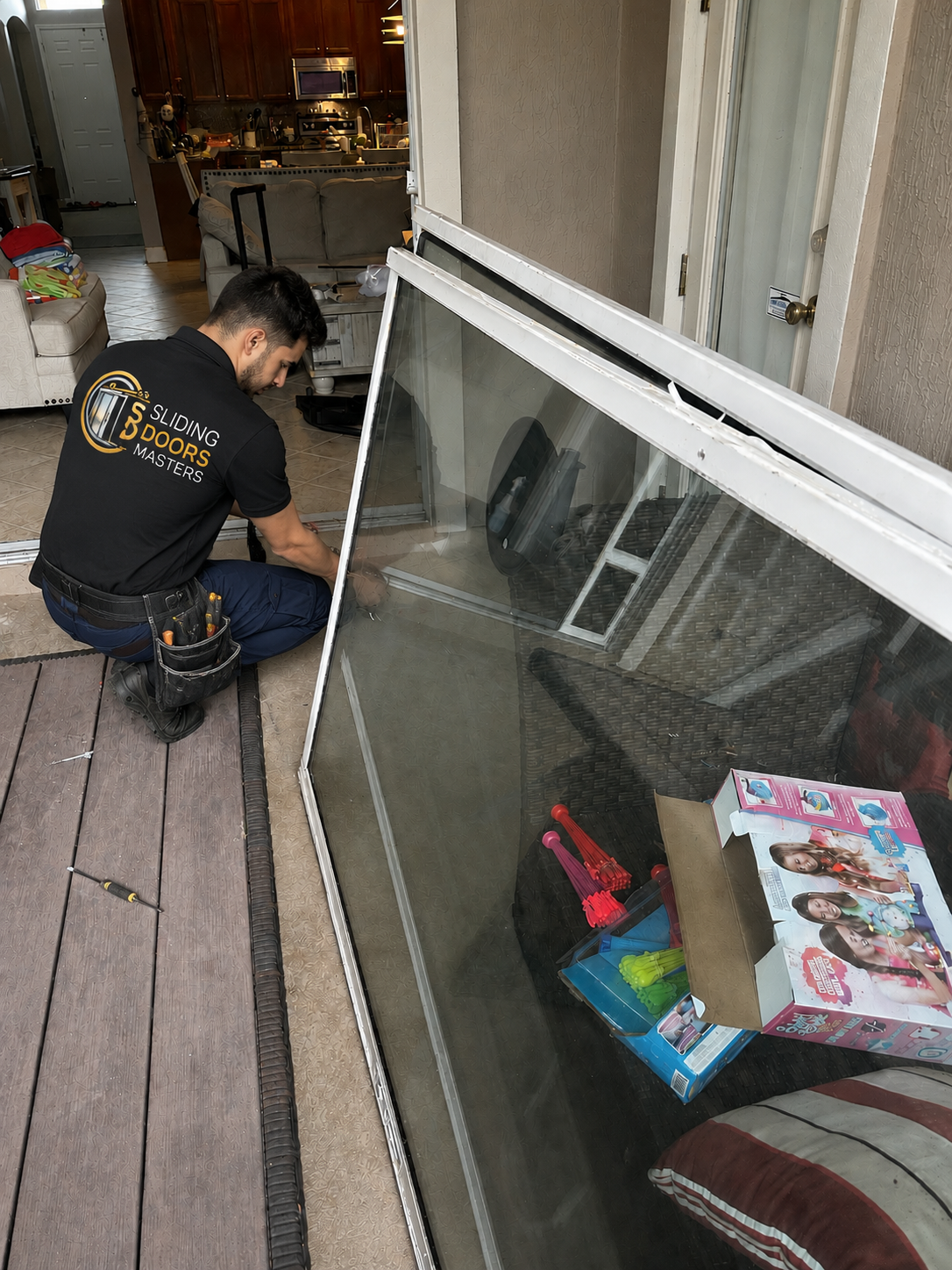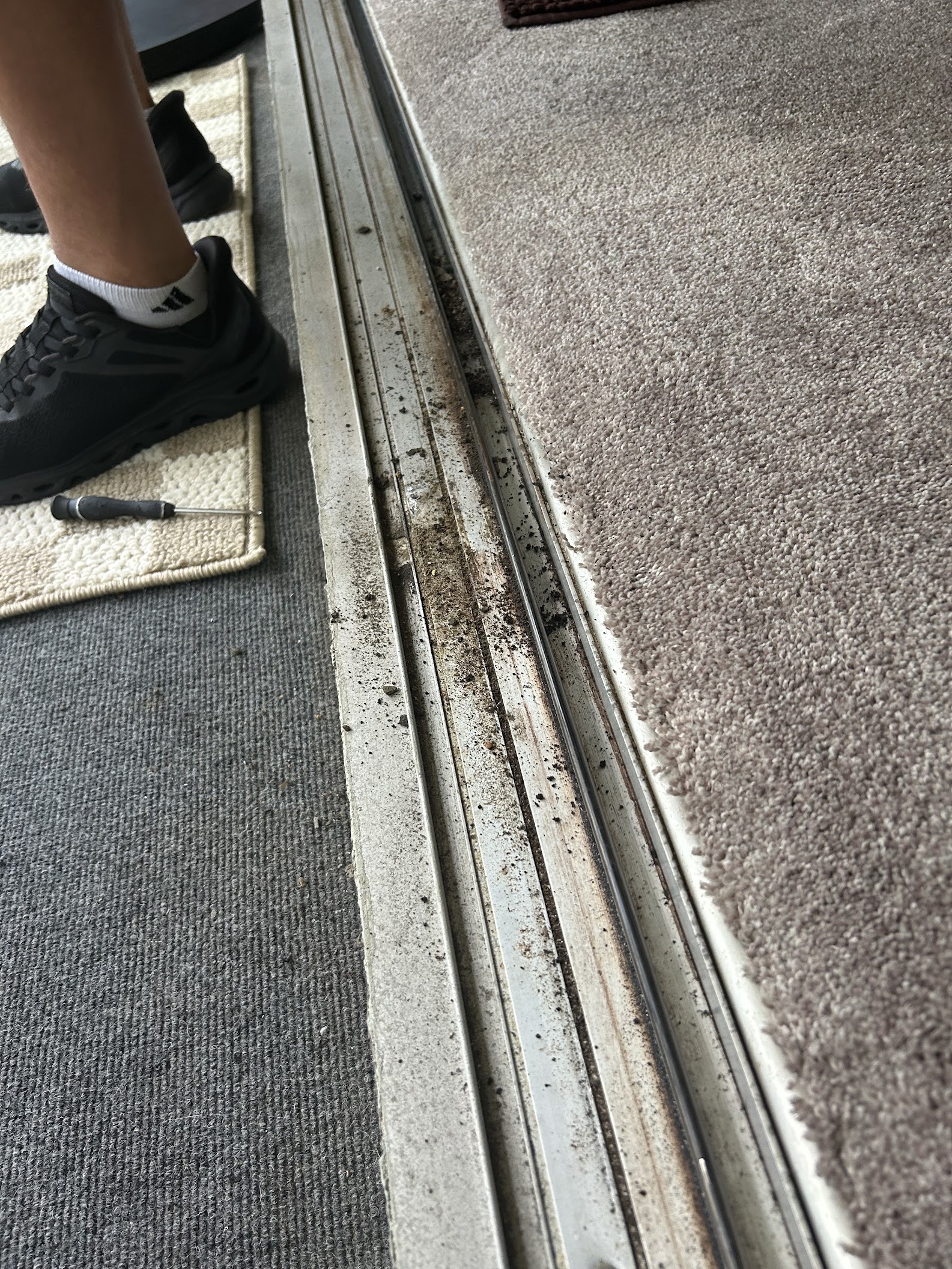
Start by identifying which step is difficult: opening, continued movement, closing, locking or passing through the opening. Repair worn support, rail damage or misalignment before relying on a larger handle. Then assess compatible hardware with the user involved. Easier operation is useful; it does not by itself certify the opening for accessibility compliance.
Ask which step causes the trouble
Observe ordinary use with the person's agreement. Is the panel hard to start, rough throughout travel or difficult to bring fully closed? Is the thumb turn difficult to grasp, or does the lock bind only at the jamb?
Do not ask someone to demonstrate a forceful workaround repeatedly. A description and a safe observation can provide enough information for the service request.
| Everyday difficulty | What to evaluate |
|---|---|
| Starting panel movement | Rolling hardware, seals and alignment |
| Pulling throughout travel | Running surface and component condition |
| Grasping the handle | Compatible shape, clearance and attachment |
| Closing fully | Panel position and meeting relationships |
| Turning the latch | Hardware condition and engagement |
| Moving through the opening | Clear path, threshold and nearby obstacles |
Restore the mechanics before adding accessories
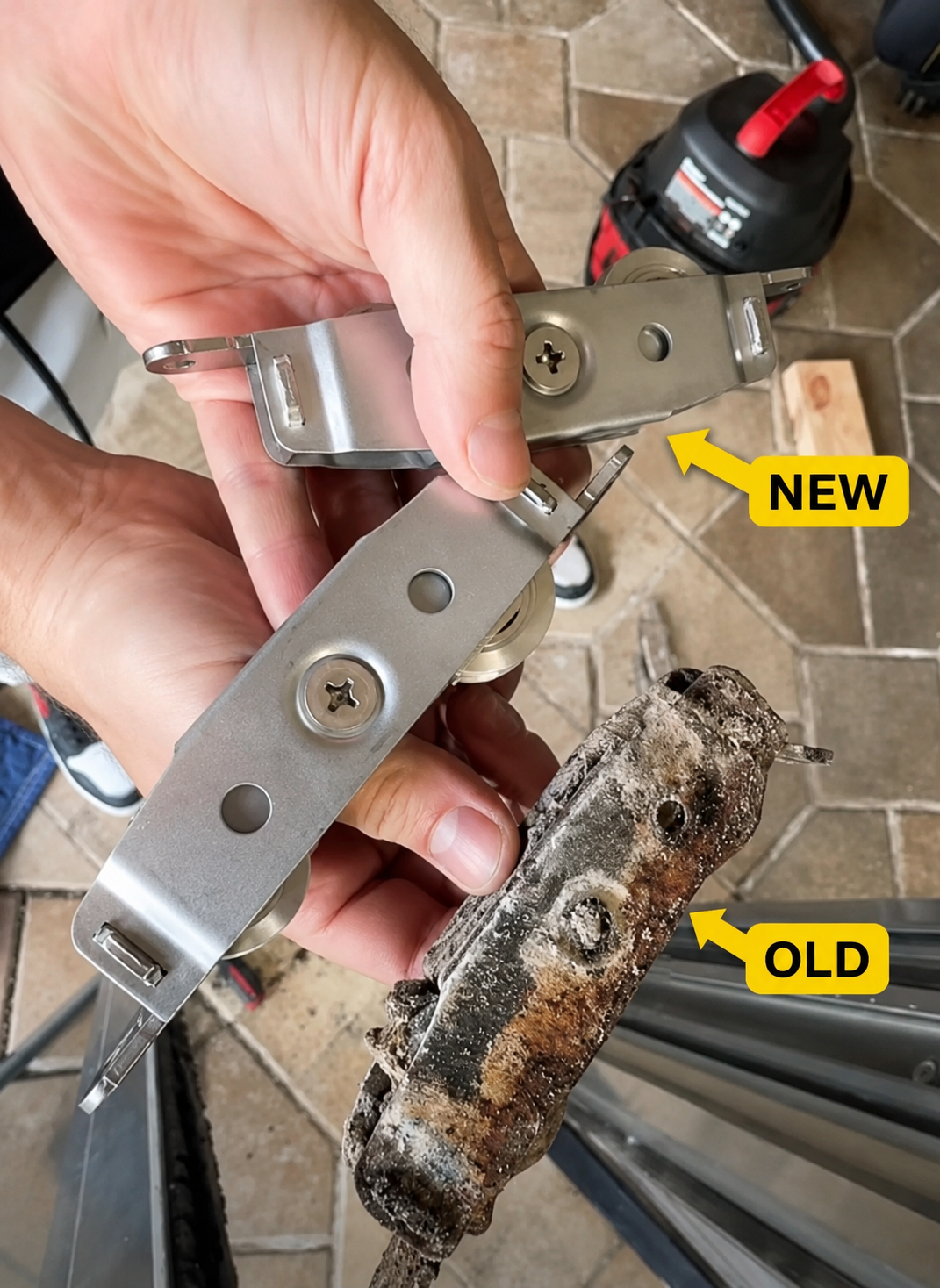
Worn rollers, a damaged rail or a dropped panel can make any handle feel inadequate. A sturdier pull may let someone apply more force while leaving the cause untouched.
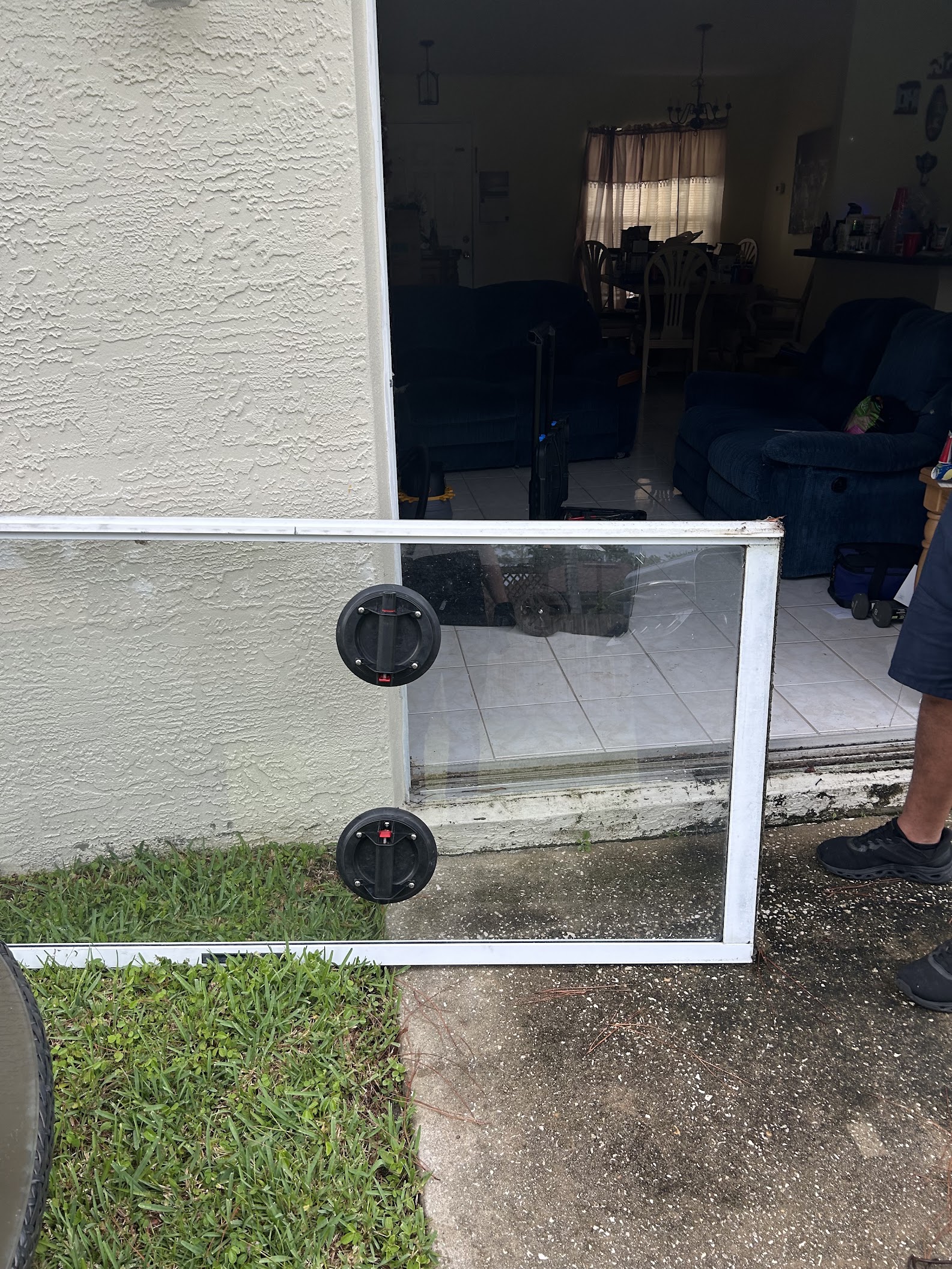
Ask for a repair that supports natural movement and locking. If the panel is unstable or the glass damaged, stop use rather than trying an accessory as the first response.
After mechanical work, the handle choice can be assessed within the actual door and the person's everyday task.
Choose compatible hardware with the user involved
Handle shape and usable clearance matter, but attachment, panel thickness and the lock interface matter too. A replacement should fit the system without creating new interference.
Let the person evaluate a suitable option where practical. A handle that looks comfortable in a catalog may not feel useful in the installed position.
Do not assume that a new pull includes a new lock mechanism. If the thumb turn is the difficult part, identify that component separately.
Include the screen and patio path
A glass door that moves well may still be followed by a dragging screen. Check the complete sequence if both components are used.
Keep the approach clear of rugs, furniture and objects that interfere with the intended path. Threshold height and other layout issues may require a different assessment than hardware repair.
Ordinary repair should not be advertised as certifying accessibility compliance. If formal compliance or structural alteration is a project goal, involve the appropriate qualified professional.
Avoid a universal one-finger promise
One-finger movement can demonstrate light operation on suitable equipment. It is not a universal standard for every panel size, mechanism or configuration.
The more useful question is whether the actual user can complete normal operation without unusual force or a special technique. Stability, natural locking and compatible equipment remain part of the result.
For residential door service in Orange Park, explain the specific step that causes difficulty rather than requesting only a stronger handle.
Test the finished task
With the door in sound condition, check opening, passage, closing and locking. Include the screen if it forms part of normal use.
Ask the technician to explain any normal mechanism or operating sequence clearly. The household should not need a new improvised trick after the repair.
Describe the task in the user's own words
A request such as "my mother can open the panel but cannot turn the latch after closing it" focuses the visit differently from "the whole door is too heavy." With the person's agreement, describe the troublesome step rather than asking for repeated demonstrations of a forceful workaround.
After mechanical repair, let the user try ordinary operation when the equipment is sound. Include the screen if it forms part of the normal sequence. A demonstration by someone stronger does not answer every usability question.
The handle article explains trim and lock distinctions. If passage or threshold changes are the goal, discuss those separately from a roller-and-hardware scope.
Reference: Andersen gliding-door hardware guide. A covered-hardware reference for handles and locking; it does not certify accessibility of an opening.
Easier-use questions
Will a large handle fix a heavy panel?
Not if worn support, a damaged rail or misalignment is the underlying problem. Inspect the mechanics first.
Does roller repair remove a threshold obstacle?
No. Panel movement and the physical path through the opening are different concerns.
Can an ordinary tune-up certify accessibility?
No. Improved operation is useful, but formal compliance requires an appropriate evaluation of the complete opening and applicable requirements.
Request an evaluation for easier everyday use. Tell Sliding Doors Masters your ZIP and the exact step that causes difficulty. Ask for a repair and demonstration that address the user's normal task.
Need this looked at on your own door? Get a free estimate or talk it through with our team.
Related service