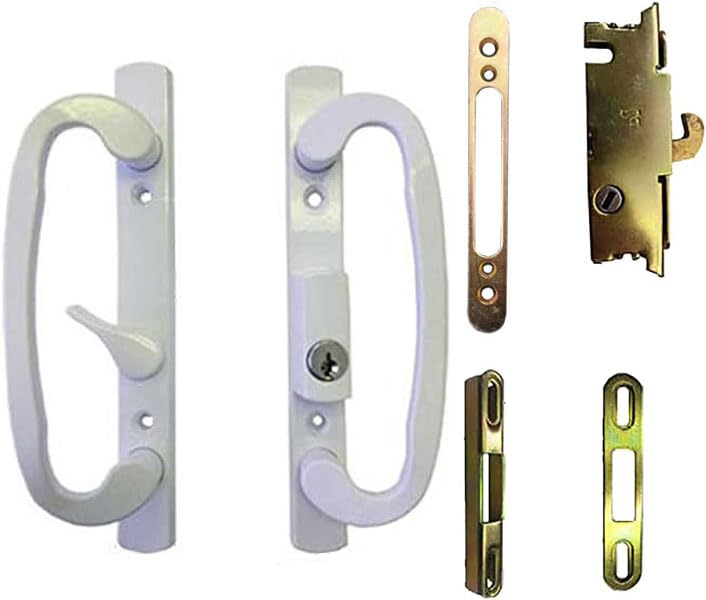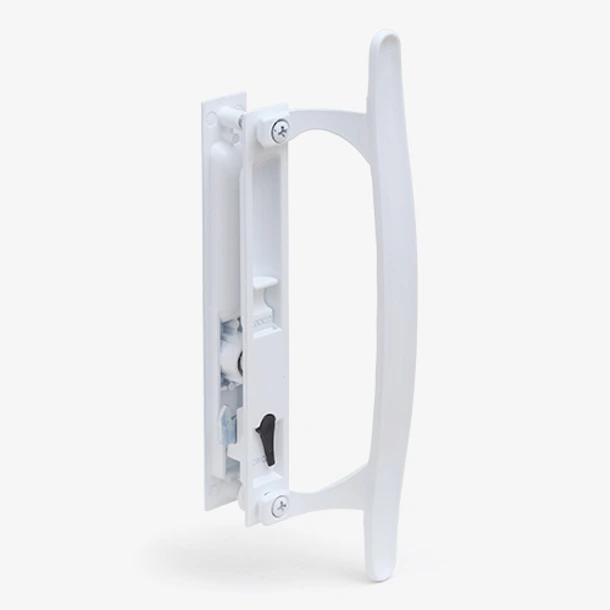
A loose sliding door handle may involve fasteners, cracked trim, damaged mounting material or excessive force from a dragging panel. The thumb turn and internal lock can be separate components. Identify what moves before buying a replacement set; a matching color and screw spacing do not establish that the whole locking complaint will be fixed.
Separate the parts you are touching
The pull gives you a place to move the panel. A thumb turn operates the locking mechanism on many designs. Inside the panel, a separate mechanism may engage a keeper on the jamb.
Some replacement trim sets do not include the actual lock. That is why an online handle that looks identical may leave the original locking complaint unchanged.
Describe whether the pull itself moves against the panel, whether the thumb turn resists movement or whether the entire door shifts when you touch the handle.
Look at the mounting area
Loose attachment can involve more than an untightened screw. A cracked handle, damaged thread, incorrect screw or weakened surrounding material needs a different response.
Overtightening can damage the handle or mounting area. A screw that repeatedly loosens deserves inspection rather than progressively greater force.
| What moves | What to inspect |
|---|---|
| Pull against the panel | Fasteners, handle condition and mounting support |
| Thumb turn without expected response | Connection to the actual locking mechanism |
| Receiver against the jamb | Attachment and surrounding material |
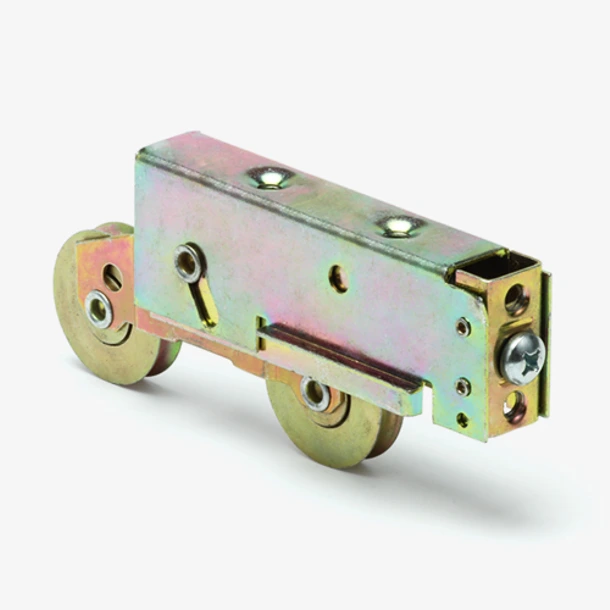
| Entire panel rocks | Roller support and retention |
| Handle flexes during normal movement | Material damage and excessive operating resistance |
Do not dismantle the mechanism or substitute long screws without understanding the product's construction.
A dragging door can overload the pull
If the panel needs a shove, household members may begin pulling harder on the handle. That can worsen looseness or stress a damaged component.
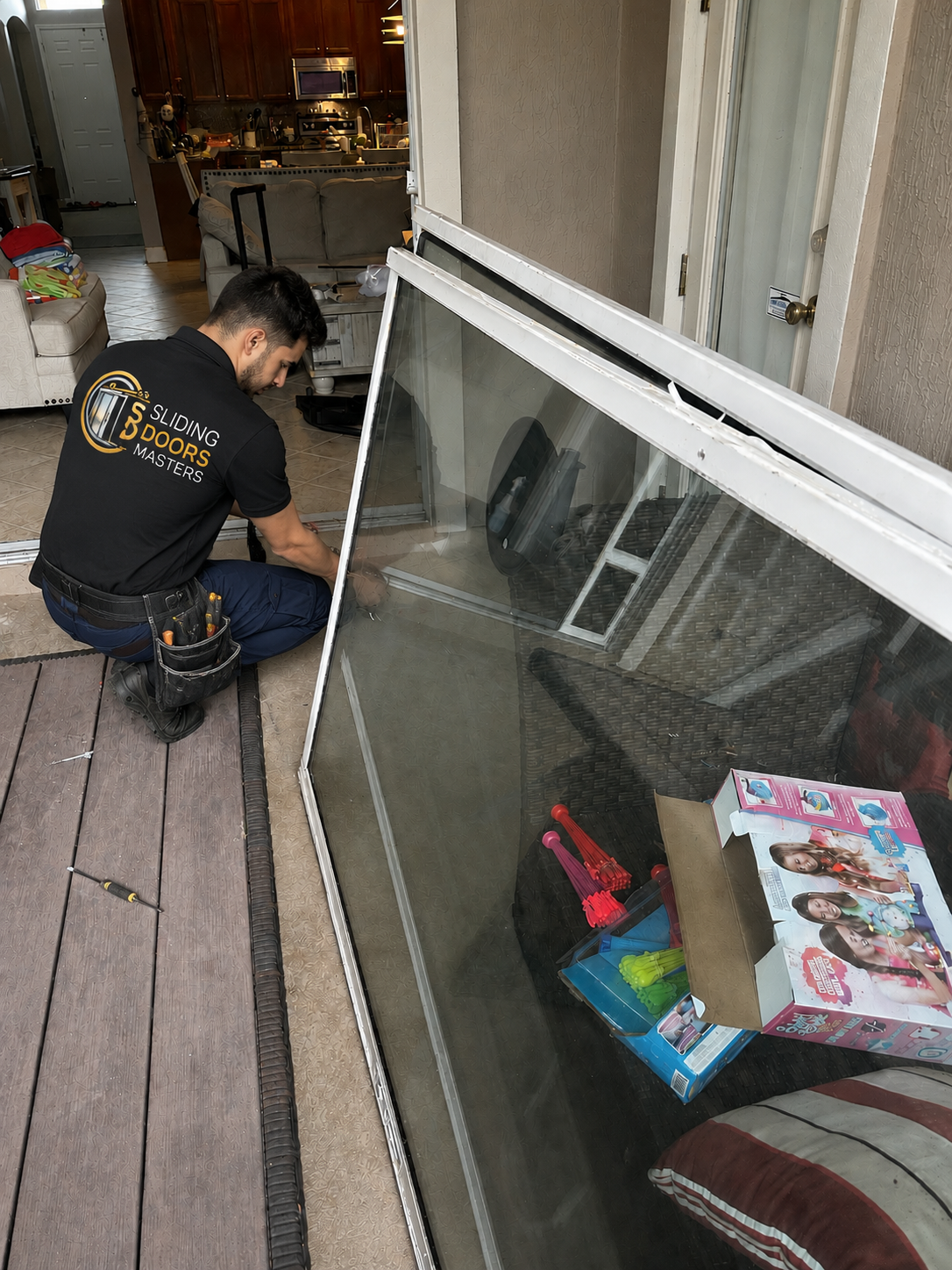
The inspection should therefore assess normal movement as well as the pull. A roller or track problem may need attention alongside handle replacement.
After repair, the handle should move the panel using its intended normal effort. It should not be used to lift a dropped corner or pull the door into alignment.
Match the replacement to the complete application
Color is not enough. Mounting spacing, panel thickness, orientation, lock interface, exterior trim and clearance can all matter.
Where a keyed exterior component is included, ask how it relates to the internal mechanism. Do not assume every handle set provides the same functions.
An altered mounting pattern also deserves caution. Creating new holes or modifying a rated panel should not be treated as a harmless shortcut to fit a convenient part.
Evaluate the finished handle and lock
Use normal movement to open and close the door, then lock and unlock it. The pull should remain secure, and the mechanism should respond without twisting or pushing the panel unusually.
Ask which components were reused and which were replaced. Keep that description with the repair record so a future replacement starts from the actual installed hardware.
For handle repair in Orange Park, send a photo of the full handle and describe whether the panel also drags. It helps the office prepare for the correct inspection.
Describe the movement before choosing the finish
Tell the office whether the pull rocks against the panel, the thumb turn spins without its expected response, or the entire panel shifts when you touch the handle. A safe photograph can show the trim, but this description adds the function a still image cannot capture.
If the handle became loose after months of forcing the door, include the movement problem in the same appointment. Replacing the pull while leaving excessive drag can keep placing stress on the attachment.
Ask which components the replacement set includes and which existing parts will remain. If the lock itself misses its receiver, the lock-engagement guide explains the separate panel-and-keeper question.
Reference: Andersen gliding-door hardware guide. Certain trim sets and lock/receiver kits are separate purchases; verify the installed application.
Handle questions
Can tightening the screws solve it?
Sometimes, when the parts and attachment are otherwise sound. Repeated looseness, cracks or damaged support need more than routine tightening.
Does a new pull include a new lock?
Not always. Confirm the contents of the proposed set and which component is actually causing the complaint.
Should I choose the strongest-looking handle?
Choose a compatible handle and correct the reason excessive force is needed. Appearance alone does not establish fit, support or function.
Arrange a handle inspection with Sliding Doors Masters. Include your ZIP, what moves at the handle and whether the panel also drags. Ask for a component description before ordering a complete trim set.
Need this looked at on your own door? Get a free estimate or talk it through with our team.
Related service