A sliding door lock can miss its keeper because the panel's height or alignment changed, the receiver moved or the locking hardware is damaged. If locking now requires lifting or slamming, assess the panel and lock together. A new handle or extra lubricant will not correct every engagement problem.
Describe the behavior precisely
Does the thumb turn resist movement at all times, or mainly when the panel reaches the closing jamb? Does the door have to be lifted, slammed or pulled inward before it latches?
Those distinctions help the inspection. Do not repeatedly force the handle to make the mechanism engage, and do not use a partially catching latch as proof that the opening is secure.
If the door cannot be locked, tell the office that explicitly when arranging service.
Inspect panel position and the receiver together
The latch and receiver need to meet in their intended relationship. Changing one without assessing the other can conceal the underlying problem.
| Symptom | Areas to consider |
|---|---|
| The lock works differently when the panel is positioned differently | Alignment and keeper engagement |
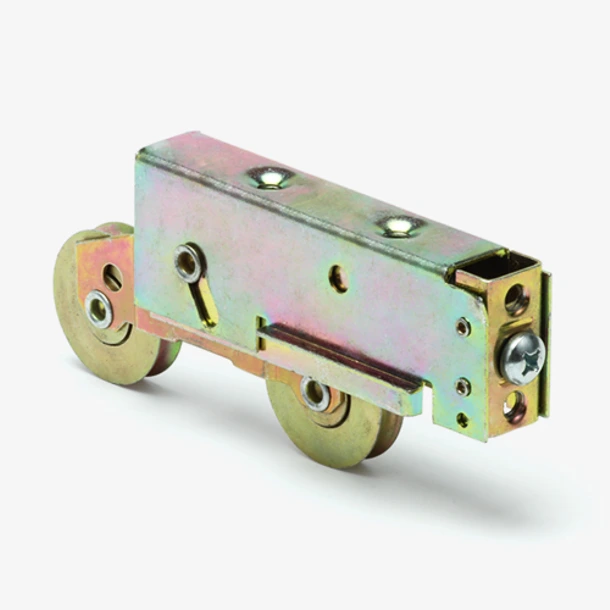
| The handle must be lifted to latch | Roller support and panel height |
| The mechanism remains stiff regardless of position | Internal hardware, contamination or damage |
| The receiver moves when touched | Attachment and surrounding material |
| A new handle did not solve the problem | Actual lock body and panel relationship |
Andersen's hardware guidance is one manufacturer example that distinguishes alignment concerns from replacement of damaged locking parts. The exact adjustment method varies by product and vintage.
Separate handle trim from the actual lock
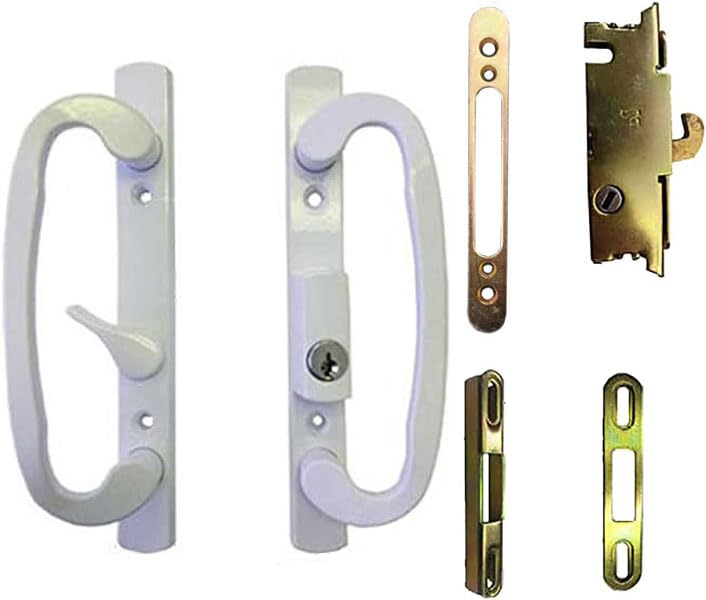
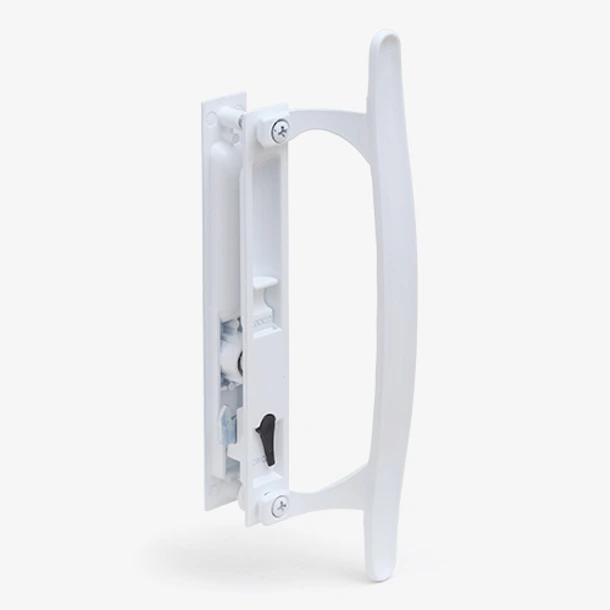
On some systems, the pull handle and decorative trim are distinct from the lock mechanism housed in the panel. Buying a new handle set may not include the part that actually secures the door.
The keeper or receiver mounted at the jamb is another component. Its attachment should be sound and its placement appropriate.
Ask which part is defective and what the proposed replacement includes. A vague “handle and lock” description can leave a homeowner unsure what is being changed.
Do not use the lock to overcome a dragging panel
A latch should not act as a tool to pull a poorly supported panel into place. Extra force can stress the handle, receiver or mounting area.
Likewise, moving the keeper repeatedly to follow a dropping door may provide temporary engagement without fixing the roller problem.
A complete repair should leave the panel properly supported and the locking components meeting naturally. If broader frame movement is involved, the recommendation should address that finding.
Test the finished result
Close and lock the panel several times using normal pressure. Confirm the handle feels secure and that unlocking works without a special technique.
Then operate the door through its normal travel. A locking repair that creates new drag or leaves the panel incorrectly positioned is incomplete.
For lock repair at a Middleburg home, describe any accompanying grinding, dropping or recent roller work. That history helps connect the security complaint to the mechanics.
Connect a new locking problem to recent door work
If locking became difficult immediately after roller adjustment, new weatherstripping or a track repair, tell the technician. A changed running height or closing relationship may be relevant even when the lock has not been replaced.
In another situation, a loose receiver may have changed position while the panel still moves normally. Those two histories point toward different inspection questions; neither proves a diagnosis from a photograph.
Ask the crew to establish sound support and natural closure, then explain the locking component that needs work. The alignment article covers panel position in more detail. If the opening cannot be secured, state that urgency when contacting the office.
Reference: Andersen gliding-door hardware guide. The guide discusses alignment versus locking-part replacement for covered Andersen configurations.
Lock-alignment questions
Can worn rollers cause a lock problem?
Yes. A change in panel height or squareness can move the latch away from its intended relationship with the receiver.
Should I move the keeper until the latch catches?
An appropriate adjustment may be part of a repair, but first establish why the relationship changed. Do not use repeated adjustment to hide failed support.
Is lubricant the answer to a stiff thumb turn?
Not necessarily. Check engagement, compatibility and hardware condition. Lubrication cannot correct missing alignment or repair damaged mounting areas.
Request a lock and alignment inspection. Give Sliding Doors Masters your ZIP and describe any lifting, grinding or recent adjustment. Call (904) 579-7030 if the door cannot be secured.
Need this looked at on your own door? Get a free estimate or talk it through with our team.
Related service