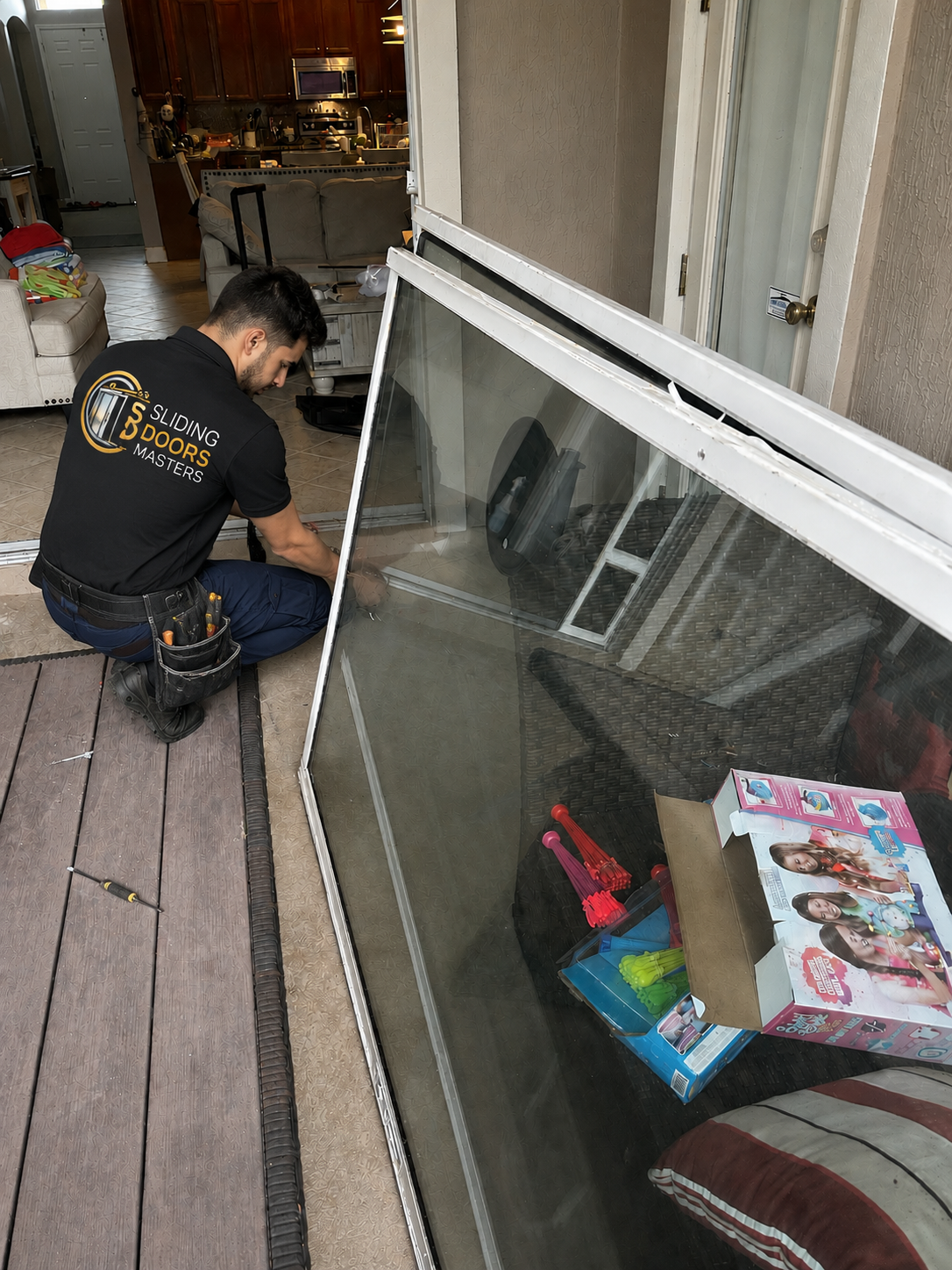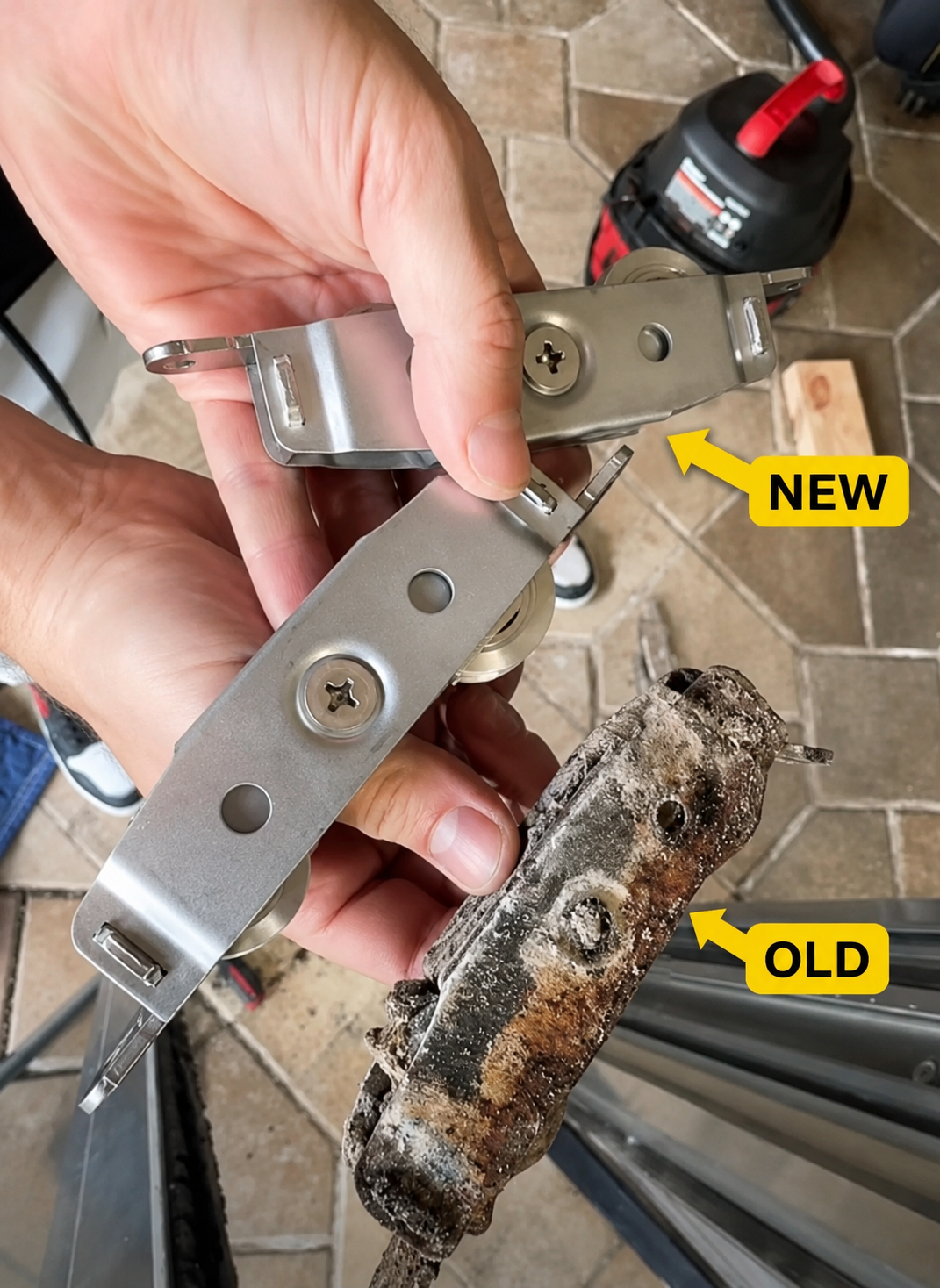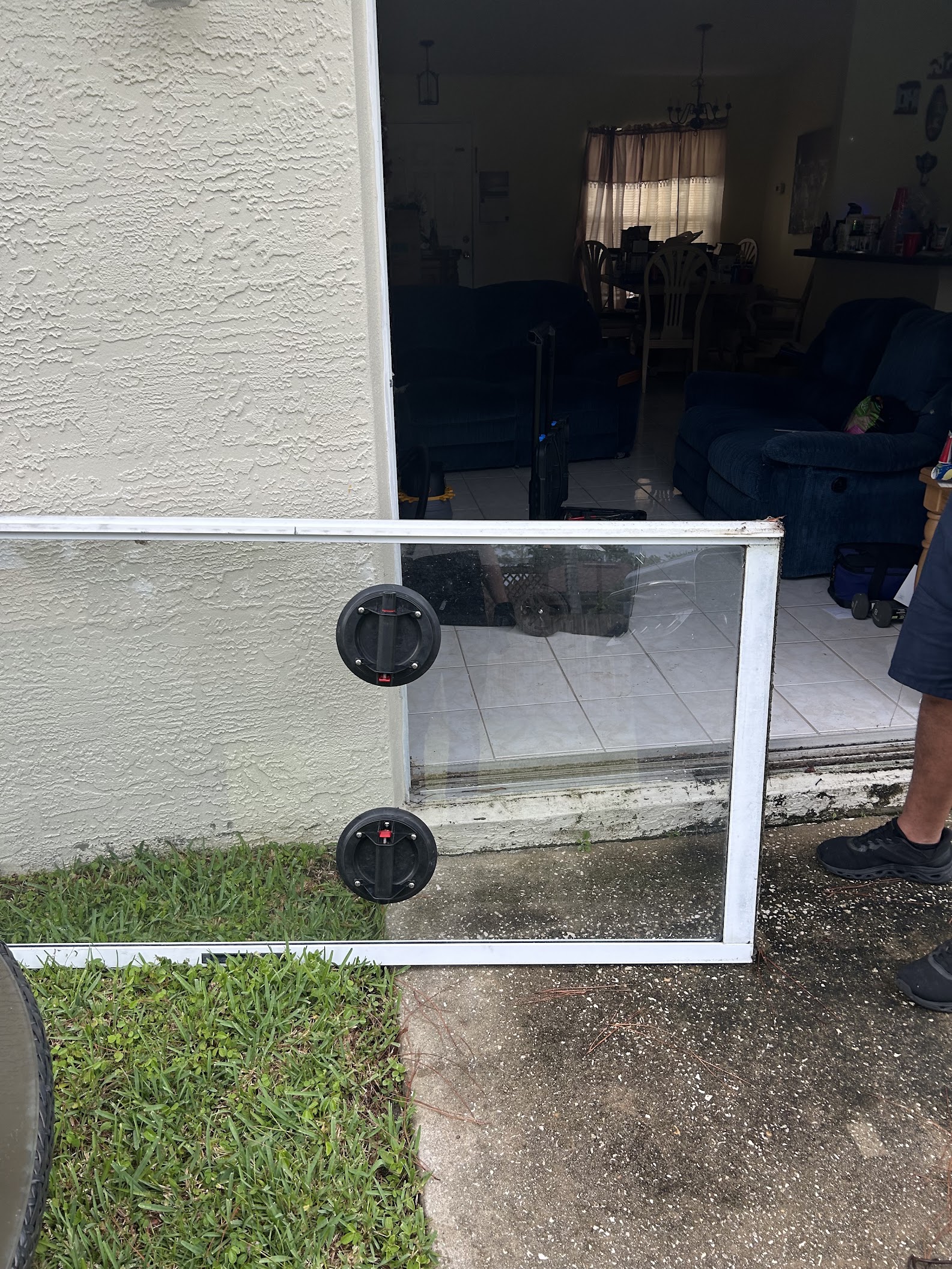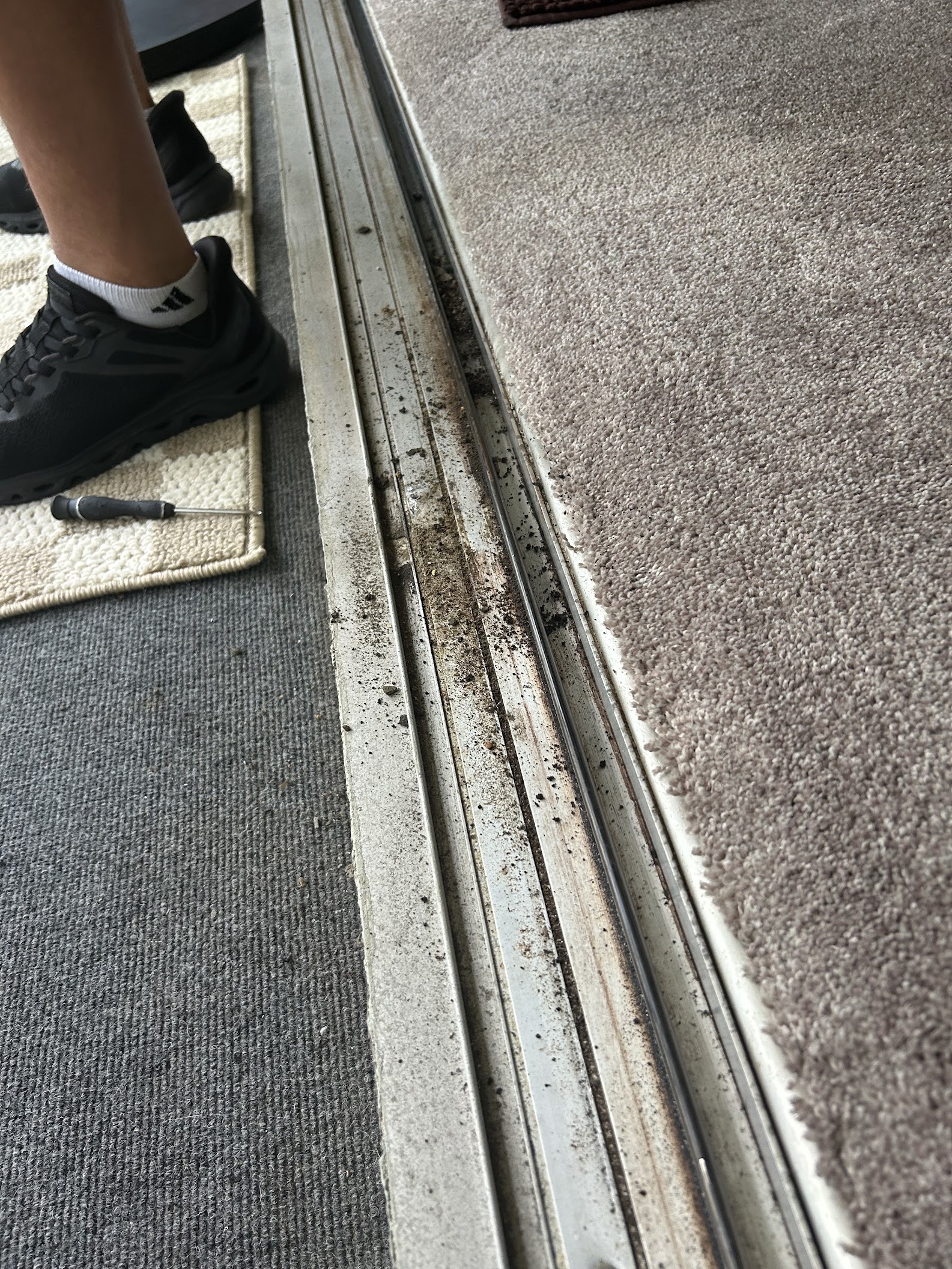
A returning sliding door problem can involve contamination, adjustment, rail damage, part compatibility or support around the opening. Compare the current symptom with the previous scope and post-repair condition. Recurrence alone does not prove failed new rollers, poor workmanship or the need for a whole new door; it supplies evidence for a follow-up inspection.
Compare the behavior before and after
Record whether the same complaint returned or a different one appeared. Grinding throughout travel differs from a new bump at a cap joint. A stiff latch differs from a corner that drops.
Note whether the change appeared immediately, gradually or after an impact, weather event or another project. Include whether cleaning temporarily improves it.
Stop operating a panel that rocks, leaves its path or has damaged glass. A follow-up comparison should not involve repeated forcing.
Read the previous scope accurately
Was the work cleaning and adjustment, replacement of roller assemblies, track repair or more than one task? Which panel was serviced?
A generic invoice can leave those details unclear. Ask for the actual installed part information and what final checks were completed.
| Previous work | Useful follow-up question |
|---|---|
| Adjustment only | Were the assemblies sound and able to retain their position? |
| New rollers | Were fit, load and rail contact confirmed? |
| Track cap or insert | Are profile, support, joints and resulting height suitable? |
| Handle or lock work | Was the panel's position also assessed? |
| Cleaning | Was persistent mechanical wear investigated? |
Those questions focus the inspection without assigning a cause in advance.
Check whether the rail was left unresolved
New wheels still need a suitable running surface. A damaged ridge can continue creating rough travel or place unusual stress on the replacement.
Likewise, a repaired rail cannot make a seized or unsuitable wheel work properly. Ask whether the recommendation considered both contact surfaces together.
A recurring fixed bump should be examined at its physical location, including any earlier repair joint.
Confirm the replacement fits the application
Housing dimensions, mounting, adjustment range, wheel profile and intended load all matter. A part can look convincing while operating at the wrong height or contact point.
Do not assume stainless material or additional wheels establishes compatibility. Nor should the previously installed part be reordered automatically if its fit is in question.
If modifications were made, ask how they relate to the original design and any relevant performance requirements.
Consider support and changed conditions
A weakened mounting area, distorted frame or broader installation condition may make an adjusted position difficult to maintain. Repeatedly turning the same screw will not necessarily address it.
Recent seal replacement, flooring, trim or patio changes can also introduce resistance. Tell the technician about work outside the original repair.
Unknown residue or new debris matters too. A clean post-repair rail can become contaminated later without any component having failed.
For roller follow-up inspection at a Jacksonville property, provide the previous record and a clear description of the new timeline.
Use warranty terms and evidence together
Review the actual warranty and contact the provider through its stated process. Coverage depends on the terms and confirmed condition, not on recurrence alone.
Safe recordings, dated observations and part descriptions help the follow-up. The next recommendation should explain what was found and how the proposed work addresses the continuing cause.
Use the timing to separate different follow-up questions
A catch that began immediately at a new cap joint raises a different question from roughness that returned gradually with visible debris. A corner that dropped again after adjustment differs from a stiff thumb turn while the panel still moves normally.
Write down when the change appeared, which panel is affected and whether it is the same original symptom. Include any flooring, seal work, impact or weather event after the repair. That history helps the crew investigate without assigning blame in advance.
The track-repair guide explains profile and joint concerns. Bring the installed part description and warranty terms so the next recommendation can be connected to the documented previous scope.
Reference: Truth end-adjust tandem roller specifications. A component example helps verify installed-part details; recurrence still requires checking the whole relevant relationship.
Recurring-problem questions
Does a returning symptom prove the new rollers failed?
No. Rail condition, fit, adjustment, contamination and frame support may also be involved.
Should I approve the same adjustment again?
Ask why the position changed and what evidence supports repeating the scope. Recurrence should inform the diagnosis.
Can warranty coverage be determined from a video?
A video helps describe behavior. Coverage and technical findings usually need the actual terms and an appropriate assessment.
Request a follow-up inspection with Sliding Doors Masters. Include your ZIP, previous scope, repair date and when the new symptom began. State whether the same problem returned or a different movement or locking issue appeared.
Need this looked at on your own door? Get a free estimate or talk it through with our team.
Related service