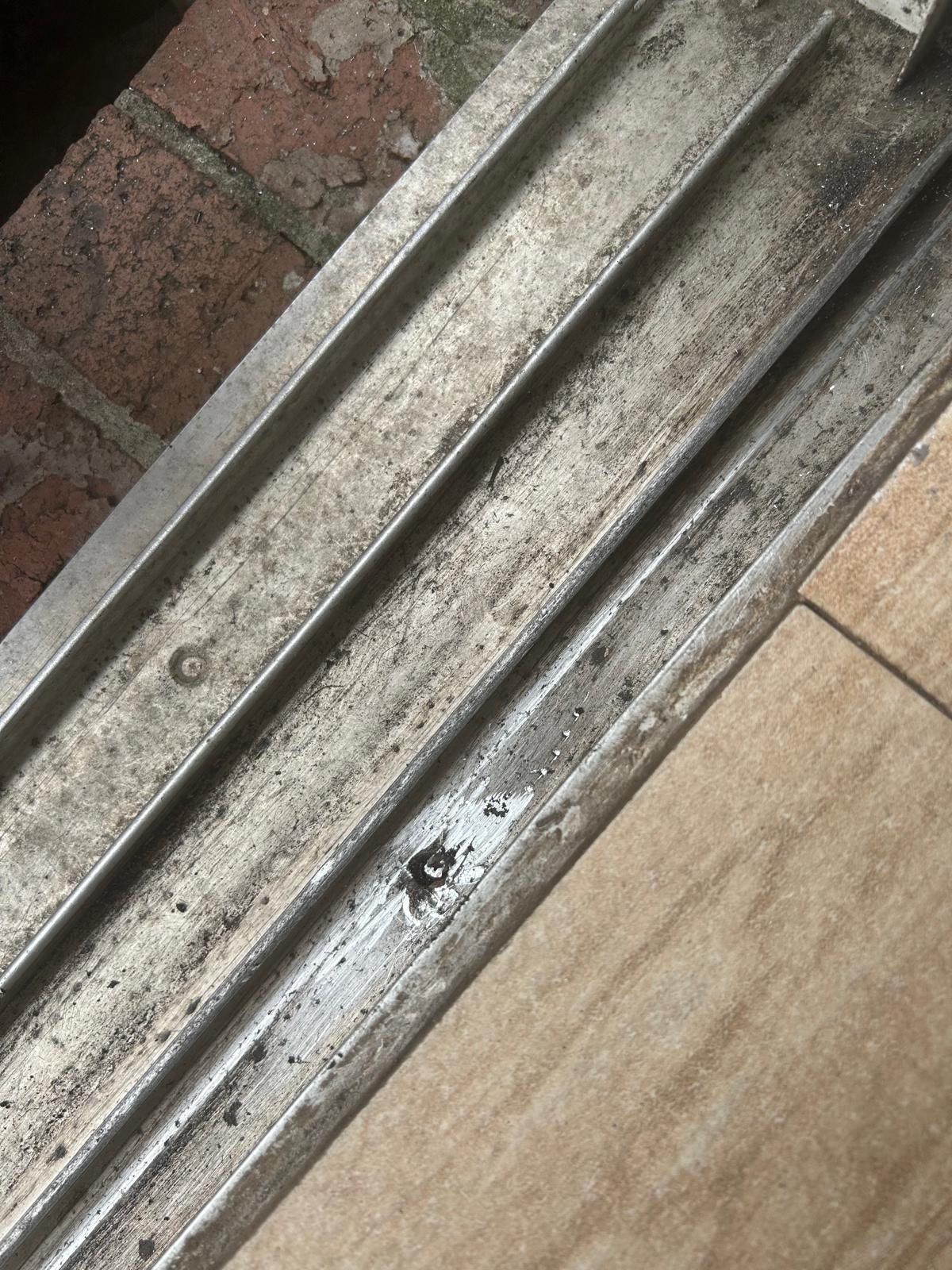
Limited running-surface damage may have a restoration path. A compatible cap can provide a new wheel-contact surface when the existing base, clearances and door design support it. Damage affecting the sill, attachment or broader frame can require a larger repair. A cap should follow a diagnosis of the rail and its support.
Separate the wheel path from the rest of the threshold
People often call the entire threshold “the track.” For repair planning, distinguish the surface the wheels contact from the surrounding channels, drainage passages and structural frame.
A smooth cap over a weakened or moving base may hide damage without providing dependable support. Likewise, replacing a running surface will not correct water entering around the frame.
Ask the technician to show you both the localized defect and the condition of the material underneath it.
When restoration may be enough
Restoration can suit a running surface with limited contamination or damage that can be corrected while preserving the intended profile. The method should suit the original material and door design.
Aggressive filing or grinding can change the rail shape. That can affect how a wheel meets the surface, even if the repaired area looks shiny. Cosmetic improvement is not the only acceptance criterion.
If the same bump remains after cleaning, the technician should explain what additional physical defect has been found.
What a compatible cap can accomplish
A suitable repair cap provides a new wheel-contact surface over an appropriate existing base. Its profile, support, attachment and resulting height need to work with the door.
| Compatibility question | Why it matters |
|---|---|
| Does the cap suit the existing ridge? | An unstable fit can move or deform |
| Is the base sound? | The new surface needs reliable support |
| Does the height suit the roller adjustment range? | Extra height changes the panel's position |
| Are joints and ends appropriate? | Abrupt transitions can create new bumps |
| Is drainage preserved? | Water passages are part of the threshold system |
The proposed product should be assessed as part of the complete opening. “Stainless cap” alone is not enough information.
When broader replacement is relevant
A cracked sill, severe material loss, loose structural attachment or damage beyond the wheel ridge may require replacing a larger component or addressing the installation. The available repair should not depend on unsupported material remaining hidden beneath a cover.
On an impact-rated or otherwise specified system, ask whether the proposed modification is compatible with the manufacturer's requirements. A general repair product does not automatically preserve or establish every original performance rating.
Full door replacement may be considered when an appropriate component repair cannot be supported. That conclusion should follow evidence about the existing opening.
Inspect the wheels before finishing the rail
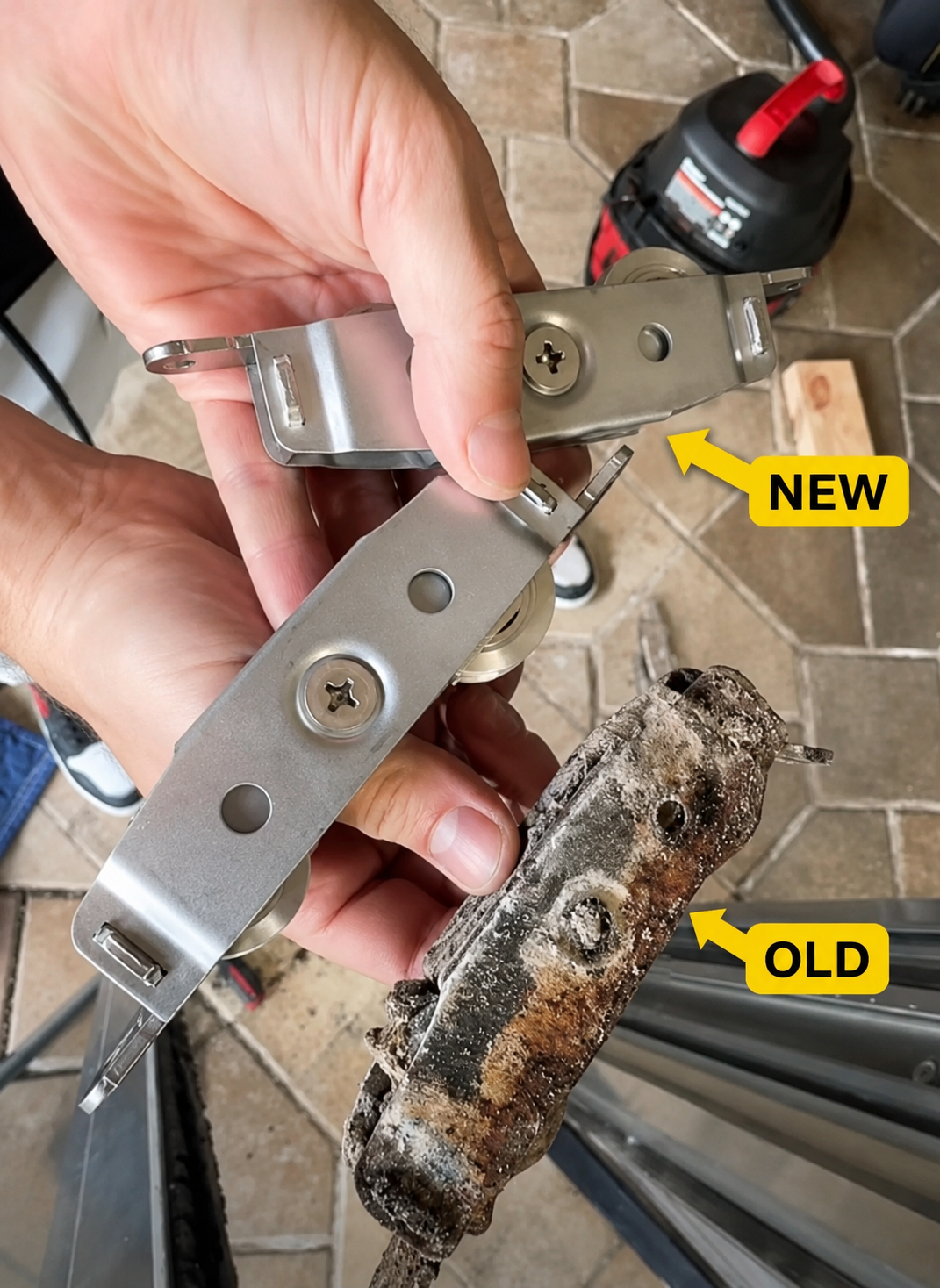
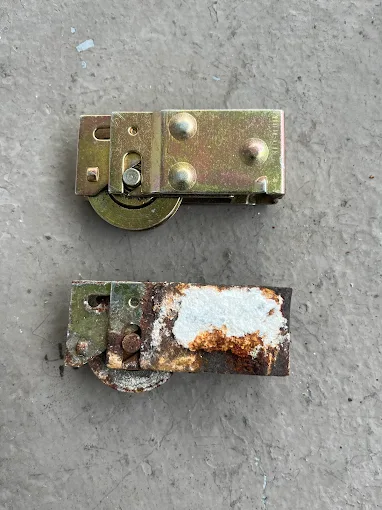
A seized wheel can drag across a repaired surface. An unsuitable wheel profile can also damage it or operate poorly. Track repair and roller condition should therefore be considered together.
After the work, test movement across every repair joint and near both ends of normal travel. Check panel height and locking as well. A local bump that simply moves to the cap's end is not a resolved problem.
For Orange Park properties, describe whether the damage followed dragging, an impact or previous repair work. That history helps distinguish wear from an unsuitable earlier modification.
Ask what changes when a cap is added
The cap is not just a new finish. It can change the height and profile of the surface under the wheels. The technician should account for that change when checking adjustment, guides, closure and lock engagement.
Consider an illustrative repair that removes the old bump but leaves a new catch at the cap's end. The wheel path has improved in one area while acquiring another interruption. Completion should include crossing both ends of the repaired section in normal travel.
Also separate the rail from water-management concerns. If your complaint includes water reaching the room, the leak-diagnosis guide explains why a smooth running surface is only one part of the opening.
Reference: Florida Product Approval database. Check documented product requirements before assuming a modification is compatible with a rated assembly.
Track-repair questions
Does every damaged track accept a repair cap?
No. Profile, support, clearance, retention and manufacturer requirements can limit the options. Some conditions call for a different repair or component replacement.
Can a cap fix a leaking patio door?
It addresses the running surface when appropriate. Leakage needs its own diagnosis, including drainage, seals and installation details.
Should a new cap make the door sit higher?
It can change the running height. The technician should account for that change and verify suitable panel position, adjustment and retention afterward.
Arrange a track inspection with Sliding Doors Masters. Include the defect's location, previous track work and whether movement, locking or water entry changed together. Ask why the proposed track method suits the existing base.
Need this looked at on your own door? Get a free estimate or talk it through with our team.
Related service