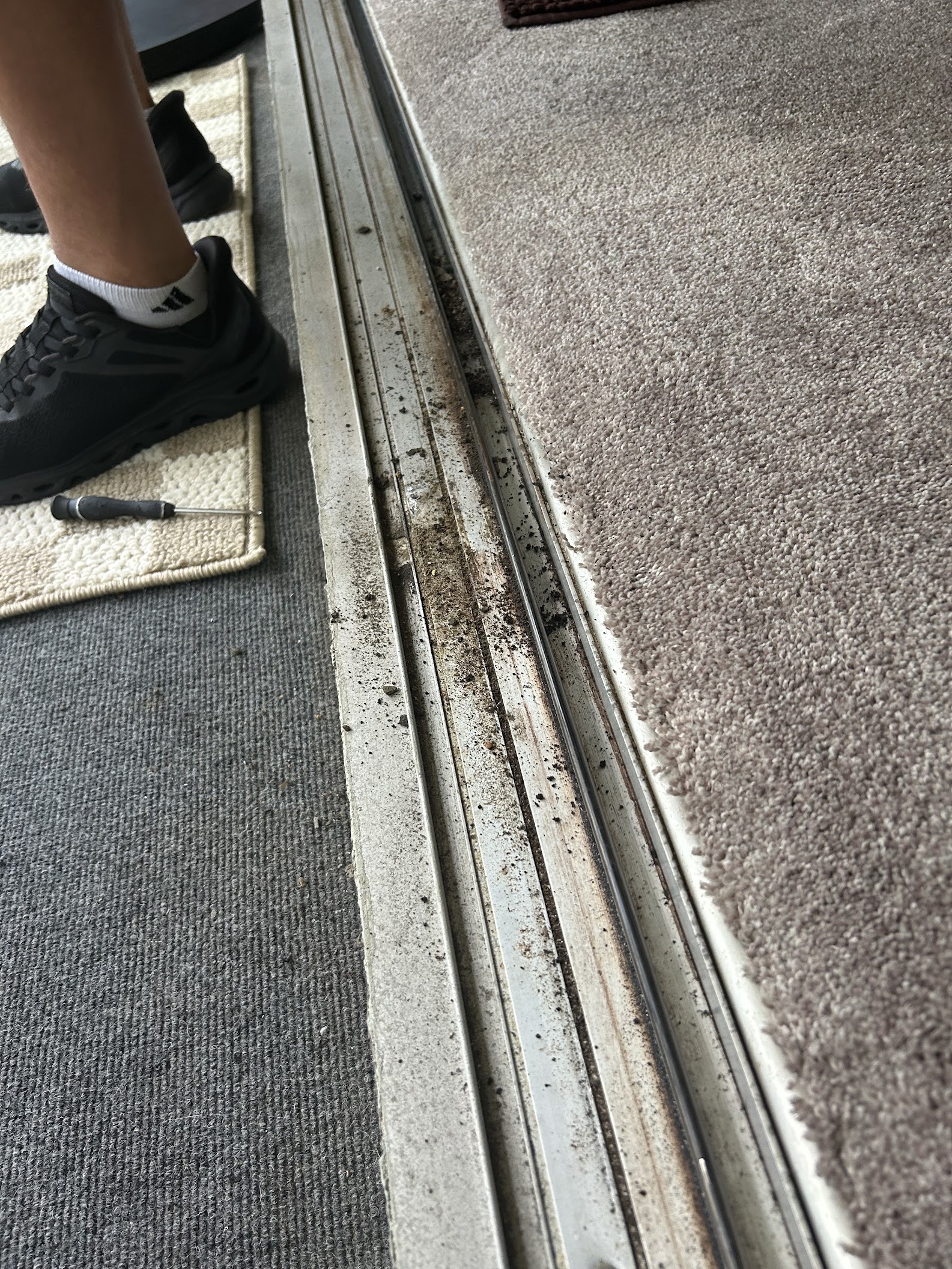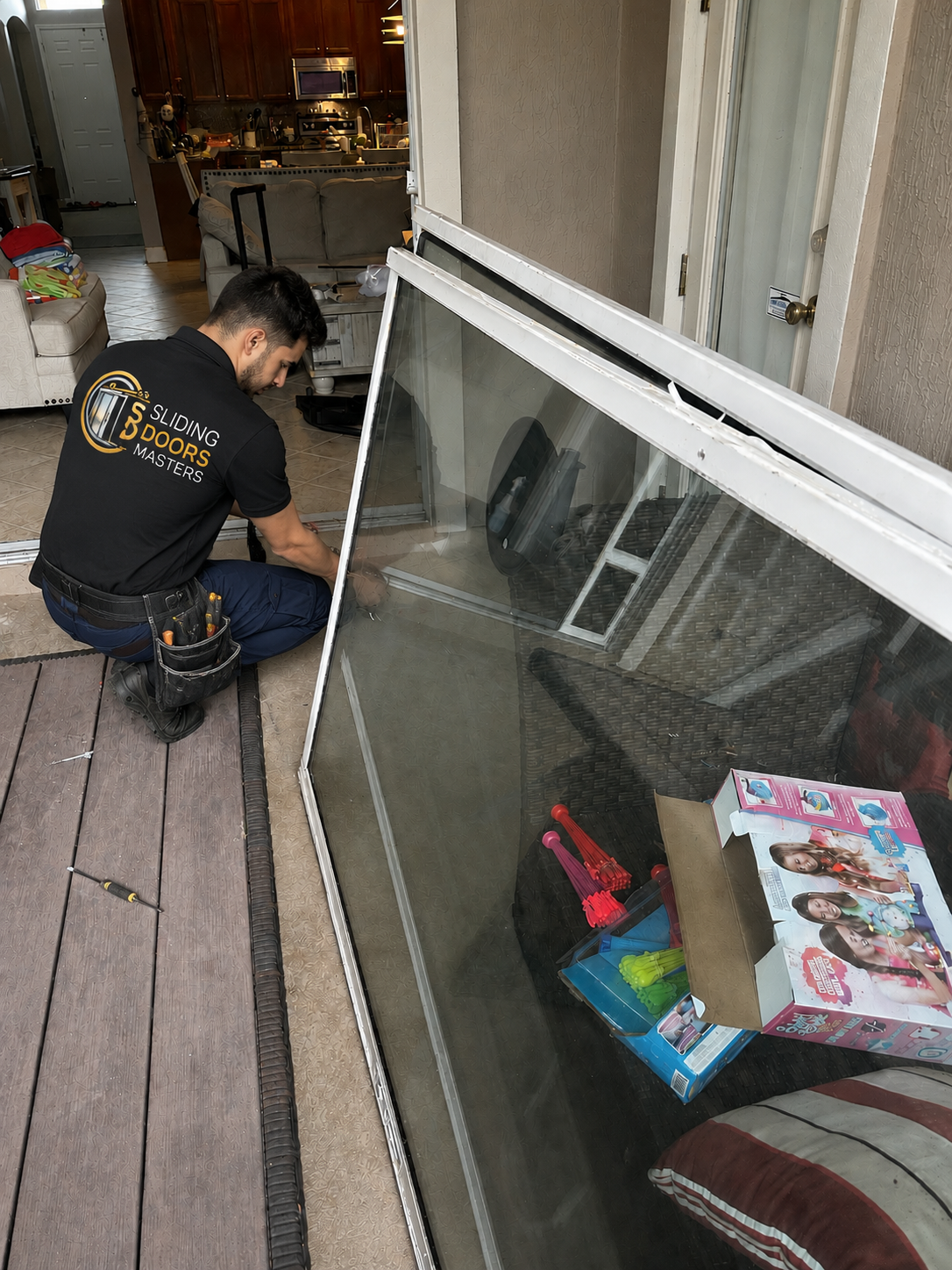
A sliding door leak needs a water-path diagnosis. Designed exterior sill channels may collect water and drain outward; water reaching the room is a different concern. Record the first visible entry and compare drainage, seal contact, panel alignment and surrounding installation details. Applying caulk before identifying those features can obstruct drainage and leave the source unresolved.
Some thresholds are designed to collect and drain water
Many sliding systems manage water in exterior sill areas and direct it outward through designed passages. An accessible channel containing water is therefore not automatically evidence of a failed door.
Water reaching the room, persistent standing water where it should drain or repeated staining still deserves attention. The specific product's instructions explain its intended drainage features.
Do not assume every slot is accidental. Sealing a designed outlet may reduce a visible gap while preventing water from leaving the system.
Capture the earliest visible entry
Observe from a safe indoor position during ordinary rain if possible. Do not stand next to damaged glass or expose yourself to dangerous weather to watch a leak.
Record the time, location and whether wind direction appears relevant. Photograph the first wet area before the moisture spreads. Previous cleaning, recent seal work and changes in panel effort are useful context.
| First visible location | Questions worth investigating |
|---|---|
| Exterior sill channel | Are its designed drainage passages clear and functioning? |
| Interior threshold edge | Are drainage, alignment and seals working together? |
| One side of the frame | Is water entering through a joint or surrounding detail? |
| Above the opening | Could the source be outside the door assembly? |
| Floor away from the sill | Is another path or concealed source involved? |
These are inspection questions, not a diagnosis from a photograph.
Check accessible contamination
Grit, leaves and household debris can interfere with reachable drainage features. Use the manufacturer's approved gentle care methods to remove accessible material.
Avoid inserting long tools through unseen cavities, enlarging holes or flushing the opening with pressure. Exterior areas that cannot be reached safely should be assessed using appropriate professional access.
If gentle cleaning does not change the problem, record that result. Repeated cleaning without tracing the water can delay a necessary repair elsewhere.
Panel alignment and seals interact
A dropped or incorrectly positioned panel may not meet the intended weatherstripping. Replacing the seal alone can leave the same gap; installing thicker material can add drag without correcting alignment.
Conversely, damaged or missing weatherstripping can matter even when rollers are healthy. The inspection should assess both contact and condition.
Lock engagement also provides context. If the latch began missing its receiver at the same time leakage appeared, a change in panel position deserves attention.
Know when the problem extends beyond routine repair
Frame distortion, damaged support or an installation-related water path may require broader work than cleaning or a seal replacement. An ordinary roller visit should not be presented as a complete building-envelope assessment.
Ask for a clear explanation of the observed source, proposed scope and remaining uncertainty. If replacement or installation correction is recommended, confirm applicable requirements with the relevant building authority.
For San Marco homes, send photographs of the surrounding floor and frame as well as the sill. Sliding glass door repair should be connected to a defined finding.
Use an inside viewpoint to locate the first wet area
Describe the location as viewed from the room: left jamb, middle sill, right lower corner or above the frame. Take a wider photo so the crew can connect the detail to the opening. Avoid identifying only the final puddle on the floor.
Two reports of "water at the patio door" can describe different paths. One may begin in a sill channel that fails to empty. Another may run down from above the outer frame. Neither can be confirmed from the floor stain alone.
Mention whether the lock and panel position changed at the same time. The alignment guide explains the relationship to seal contact without promising adjustment will cure every leak.
Reference: PGT/MITER care and maintenance guide. The guide describes outward-draining weep systems on covered products. Identify the actual threshold before modifying passages.
Leak questions
Should I caulk every visible opening?
No. Some openings serve drainage or another intended function. Identify the feature and water path before sealing it.
Can raising the rollers stop a leak?
Correct alignment can improve intended seal contact, but it is not a universal leak repair. Drainage and installation problems can remain.
Does replacing glass fix water at the floor?
Only if the actual diagnosis supports that scope. Water may enter through other parts of the system or surrounding construction.
Request a sliding door leak evaluation. Send Sliding Doors Masters your ZIP, the first visible wet location, when it occurs and any recent seal or alignment work. Include the frame and floor in safe photographs.
Need this looked at on your own door? Get a free estimate or talk it through with our team.
Related service