After a storm, document the opening from a safe position before nonurgent cleaning or changes. Record damaged glass, instability, water entry, debris and any change from previous operation. An unsecured or unstable opening needs prompt assessment when access is safe. Visible damage and timing help an inspection; they do not establish an insurance coverage decision.
Separate urgent hazards from ordinary contamination
Cracked glass, a panel outside its running path, pronounced rocking or visibly loose framing deserves professional assessment before normal operation.
Loose sand on a stable, intact threshold is a different finding. Gentle accessible cleaning may be appropriate once conditions are safe, but document the original condition first.
If water has reached electrical equipment or a motorized door operator, avoid electrical troubleshooting. An automatic entrance should be handled according to its owner's instructions by appropriately qualified personnel.
Photograph the whole opening, then the details
Take images from a safe position. Include the entire door, the affected panel and the specific defect. A close-up alone may not show where the condition sits in the frame.
Useful details include:
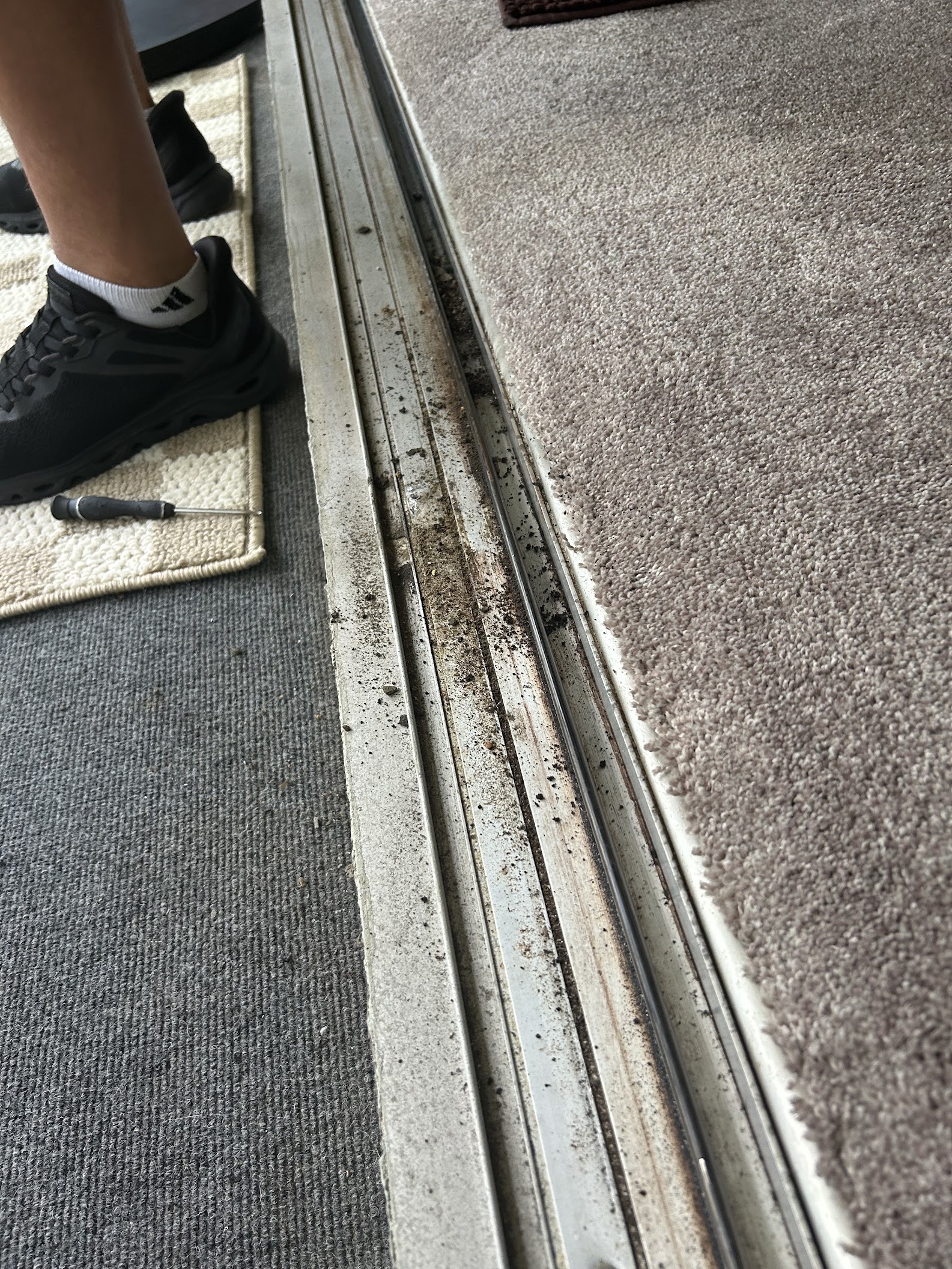
- The running ridge where a bump or gouge appears.
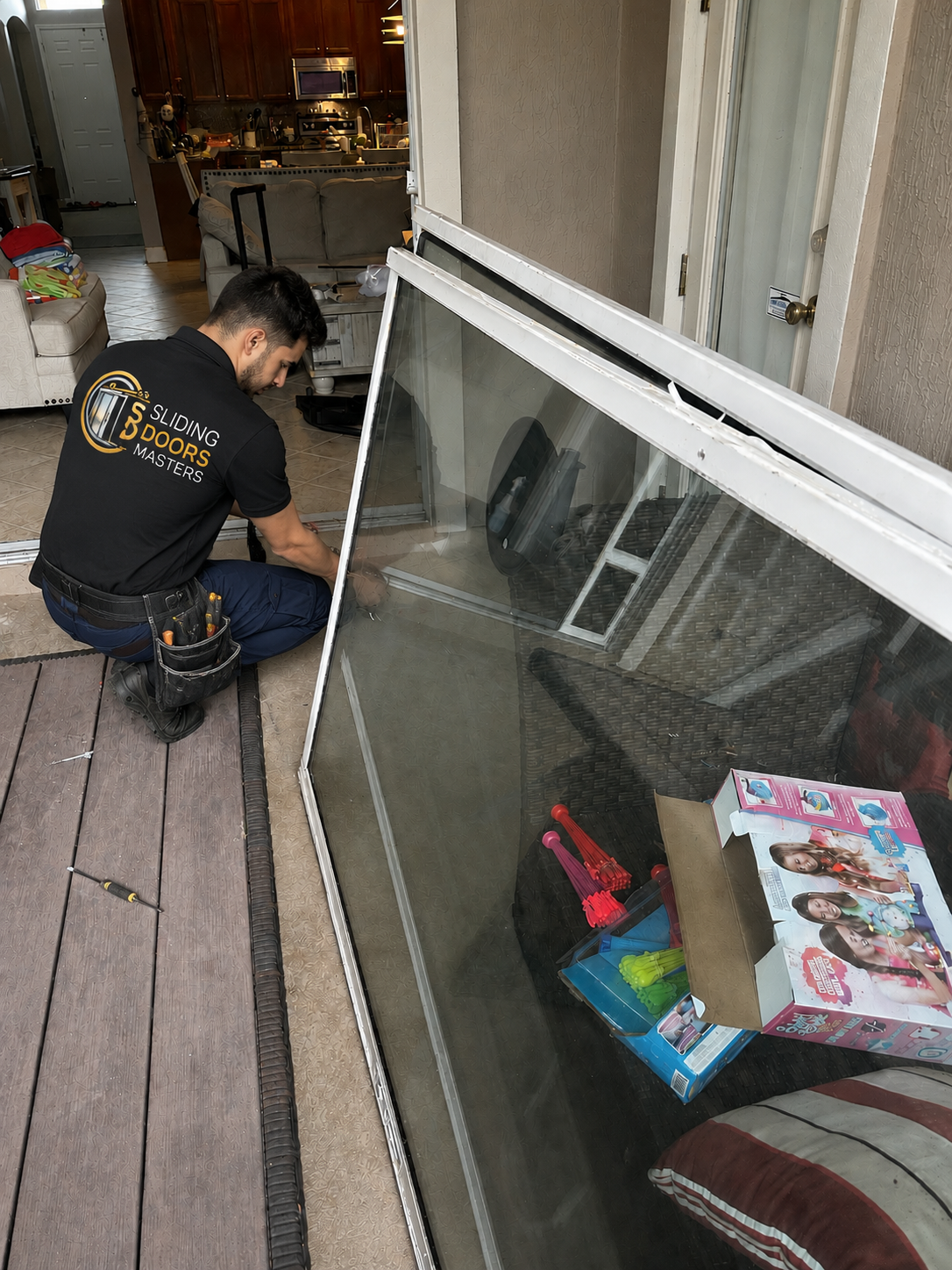
- Glass damage without touching or moving the broken panel.
- Water marks and where moisture first entered the room.
- Changed gaps around the panel or frame.
- Deposits or debris in safely reachable drainage areas.
- Existing manufacturer labels and prior repair paperwork.
Do not remove seals, covers or a glass panel solely to improve the photographs.
Describe what changed
Record how the door operated before the weather and what happened afterward. Note whether the condition is constant, whether one panel is affected and whether the lock still engages.
| Change | What an inspection may need to consider |
|---|---|
| New roughness with visible grit | Contamination and possible running-surface wear |
| A new fixed bump | Local rail damage or an obstruction |
| A panel that now sits unevenly | Support, adjustment and the surrounding installation |
| Persistent indoor leakage | Drainage, seals, frame details and broader water entry |
| Cracked or missing glass | Appropriate glazing and panel condition |
The pattern supports diagnosis, but it does not establish the cause or responsibility by itself.
Avoid quick modifications that obscure the problem
Do not hammer the rail, remove retaining parts or cover drainage slots with caulk. Those changes can make the opening harder to evaluate and may introduce new damage.
Similarly, a heavy coating of lubricant can change the appearance of the evidence without repairing failed hardware. Tell the technician about any cleaning, adjustment or temporary protection already completed.
If the opening cannot be secured safely, describe that urgency to the office. Temporary protection and permanent repair may be separate scopes, depending on the actual damage and available materials.
Keep insurance documentation factual
Save dated photographs, inspection findings and written estimates. If you have a claim, ask the insurer what documentation it requires before nonurgent permanent changes.
A repair company can describe observed damage and proposed work. Coverage decisions belong to the insurer, and a visible defect is not proof that a specific event caused it.
Ask that estimates distinguish the affected components rather than combine everything under an unexplained “storm repair” line.
For Ponte Vedra Beach properties, include building access and the location of the affected panel. Emergency door service may address an unsecured or damaged opening when conditions permit.
Build a short sequence instead of a folder of unlabeled photos
Use three labels: initial condition, any safe cleaning or temporary work, and inspection findings. Note dates and identify the affected panel from inside. A wide image followed by a close detail makes each condition easier to locate.
For water entry, record the earliest visible wet point before the puddle spreads. For rough travel, describe whether the same complaint existed before the weather. That distinction keeps the history useful without assuming the storm caused every defect.
If glass is damaged, the broken-glass guide explains what to tell the service office. Save factual findings and estimates for any claim, and confirm documentation requests with the insurer.
Reference: PGT/MITER care and maintenance guide. Covered-product care explains cleaning and drainage; event causation and insurance coverage remain separate questions.
After-storm questions
Can cleaning be enough?
Sometimes, if contamination is the only problem and the panel remains sound. Continued roughness, instability or changed alignment needs further inspection.
Does new leakage mean the glass must be replaced?
Not necessarily. Water can enter through drainage, seals, framing or the surrounding installation. Identify the path before choosing a component.
Can a repair estimate guarantee insurance coverage?
No. Keep the findings and proposed scope factual, and confirm claim requirements with your insurer.
Request an after-storm inspection with your ZIP, affected panel and dated observations. Call (904) 579-7030 if the opening is unstable, exposed or cannot be secured, and explain the access conditions.
Need this looked at on your own door? Get a free estimate or talk it through with our team.
Related service