New weatherstripping can address worn or missing material when the replacement fits the door. If the panel is low, out of square or incorrectly positioned, alignment may also need correction. A thicker seal can add drag without restoring intended contact. First locate the draft and check the seal, panel and surrounding opening together.
Locate the draft without damaging the opening
Observe safely accessible gaps and where unusual airflow is felt during ordinary conditions. Note whether the concern sits near the jamb, meeting stile, lower edge or surrounding trim.
Describe whether it changes with wind or panel position. If the door also began dragging or its lock started missing, include those symptoms.
Do not remove seals or guides to inspect behind them without the applicable procedure. Their attachment and shape can be important to the design.
Weatherstripping works through intended contact
Pile, gaskets and other seal profiles need to suit the system. Flattened, torn or missing material can reduce their function.
A sound seal can also fail to contact a dropped or incorrectly positioned panel. Replacing it with a larger profile does not automatically restore the intended geometry.
| Finding | What to assess |
|---|---|
| Visible torn or missing material | Compatible replacement and attachment |
| Uneven panel-to-jamb relationship | Roller support and alignment |
| Draft began after adjustment | Whether panel position remains appropriate |
| New resistance after seal work | Correct profile, placement and contact |
| Air appears around surrounding trim | Installation details beyond the moving panel |
Thickness is not a universal solution
A seal that is too thick can increase drag or prevent natural locking. Adhesive material intended for another kind of door may also be unsuitable for the profile or finish.
Choose by the actual application, not by the largest roll available. A replacement should preserve intended movement and contact.
Ask the technician to identify what was found and why the proposed profile fits. Keep the specification rather than only a receipt labeled “weatherstrip.”
Inspect the moving panel's support
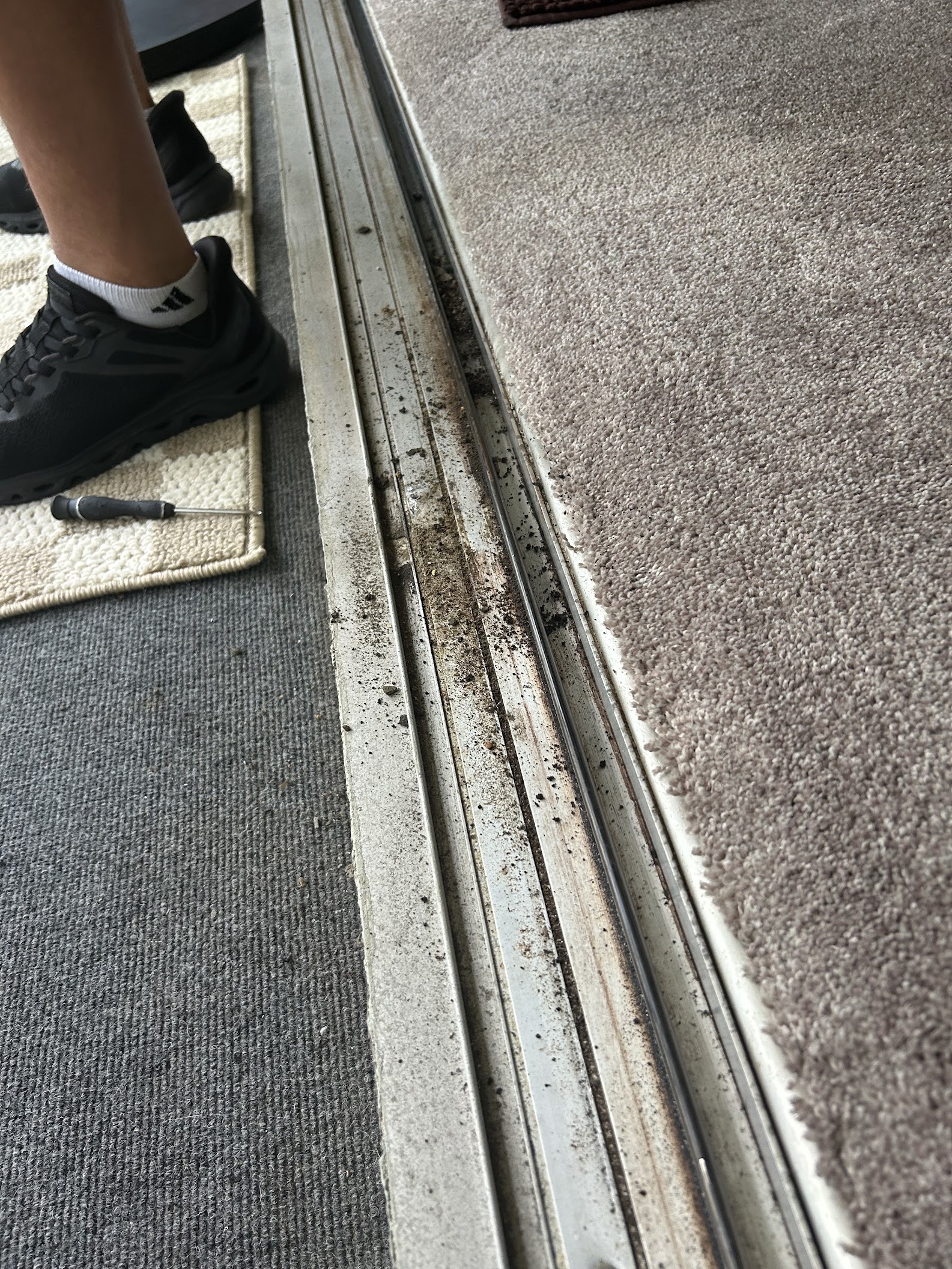
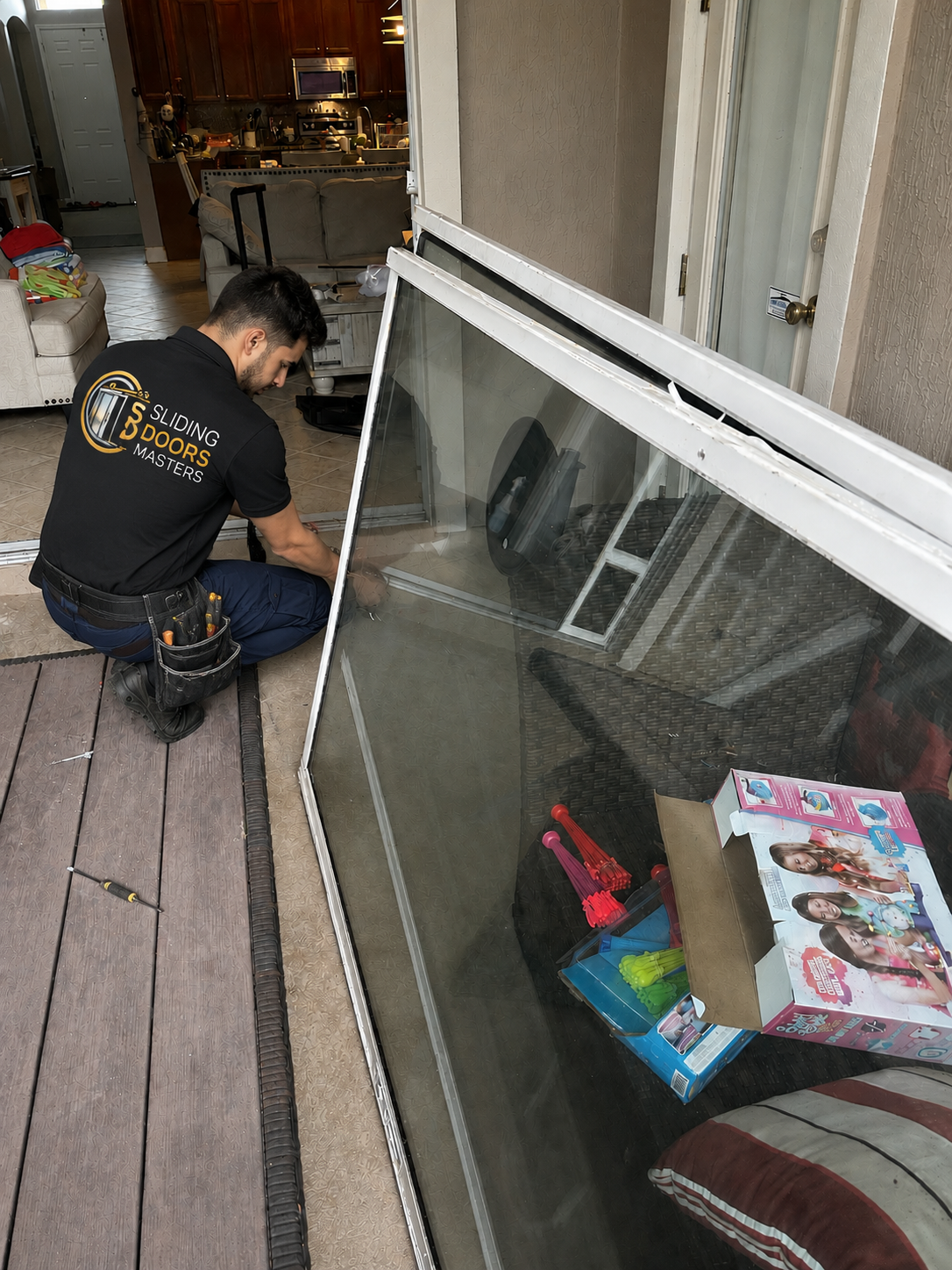
Worn rollers can change height and squareness. A damaged track can influence how the panel travels and meets the closing area.
An alignment correction may improve seal contact when the existing material is sound. It cannot restore a torn gasket or correct every installation-related gap.
That is why a full inspection can be more useful than separate visits that each adjust only one visible component.
Distinguish comfort improvement from a rated upgrade
Correcting a defined air path may improve comfort. It does not create a new certified energy rating for the existing door or guarantee a particular reduction in the utility bill.
Solar heat through glazing and conductive heat transfer are different issues from a draft. If the room remains hot after the gap is addressed, discuss the broader glazing and shading conditions separately.
For door tune-up service in Fruit Cove, explain whether the problem is airflow, heat, movement or a combination.
Test the completed seal repair
Open, close and lock the panel with normal effort. Check that the work has not created a new rubbing point or made the handle carry extra load.
Review the original location of the draft under comparable conditions when possible. A single calm-day demonstration may not fully reproduce a wind-related complaint.
Separate air movement from other comfort complaints
A homeowner may feel a draft at the closing jamb while another reports a hot room in direct afternoon sun. Those complaints can coexist, but replacing weatherstrip does not answer every glazing or solar-heat question.
Describe where airflow is felt and whether the panel or lock also changed. If seal work recently made movement harder, tell the technician which material was installed and when. Ask why the proposed profile fits rather than choosing by thickness alone.
If you are considering a new door for broader comfort goals, the replacement-selection guide explains rated configurations. For the existing door, completion should include normal movement and locking as well as the original seal concern.
Reference: Marvin care and maintenance guidance. Covered-product seal care does not replace checking intended panel contact and the surrounding opening.
Draft questions
Can new rollers reduce a draft?
They may restore appropriate panel position when worn support caused lost contact. Damaged seals or installation problems can still require separate work.
Should I caulk the moving-panel gap?
Do not seal intended moving interfaces or drainage features. Identify the actual path and appropriate component before modifying the opening.
Will weatherstrip replacement make the room cooler?
It may address a defined draft, but room conditions also depend on glazing, sun, HVAC and other factors. Avoid a guaranteed savings or temperature promise.
Request a draft and seal-contact evaluation with Sliding Doors Masters. Include your ZIP, the airflow location and any new drag after seal work. Describe heat through the glass separately from a moving-panel gap.
Need this looked at on your own door? Get a free estimate or talk it through with our team.
Related service