Heat or humidity may change clearances or material behavior and make existing wear, misalignment or seal drag more noticeable. Compare when and where the door sticks before adjusting it. A door that binds in afternoon sun still needs a check of support, running surfaces and rubbing components; weather alone does not determine whether replacement is needed.
Record a pattern before making adjustments
Observe the same panel at different times without forcing it. Note whether direct sun reaches the opening, where the panel rubs and whether its lock behaves differently.
An occasional difficult day and a steadily worsening door tell different stories. Also record recent changes such as new flooring, trim work, a weatherstrip replacement or roller adjustment.
| Observation | What to investigate |
|---|---|
| Resistance increases with direct sun | Clearances, rubbing surfaces and frame/panel relationship |
| A wooden component changes seasonally | Moisture-related movement and finish condition |
| One specific point always catches | A localized obstruction or rail defect |
| Locking changes along with effort | Overall panel alignment |
| Resistance increases over weeks regardless of weather | Wear, contamination and mechanical support |
These clues guide inspection. They do not justify changing the frame from a distance.
Materials respond differently
Metal, vinyl, wood and weatherstripping do not behave identically. A door assembly contains several materials that must continue working together.
Small changes in dimensions or flexibility can matter when existing clearance is already limited. If the panel was adjusted too high, a seasonal change may expose rubbing near an upper guide. If it sits low, the lower rail may contact the threshold.
That makes correct baseline positioning important. An adjustment should leave the system operating as intended, not simply relieve today's tightest point.
Check seals and recent work
A thick replacement seal, misplaced pile or painted weatherstrip can add drag. A rug, new flooring edge or trim detail may create interference that appears unrelated to the roller assemblies.
Look for visible contact marks and a change that began immediately after another project. Do not trim seals or remove guides simply because they touch the panel; some contact is part of their intended function.
Ask whether the correct profile and installation method were used for any replaced component.
Weather can expose existing wear
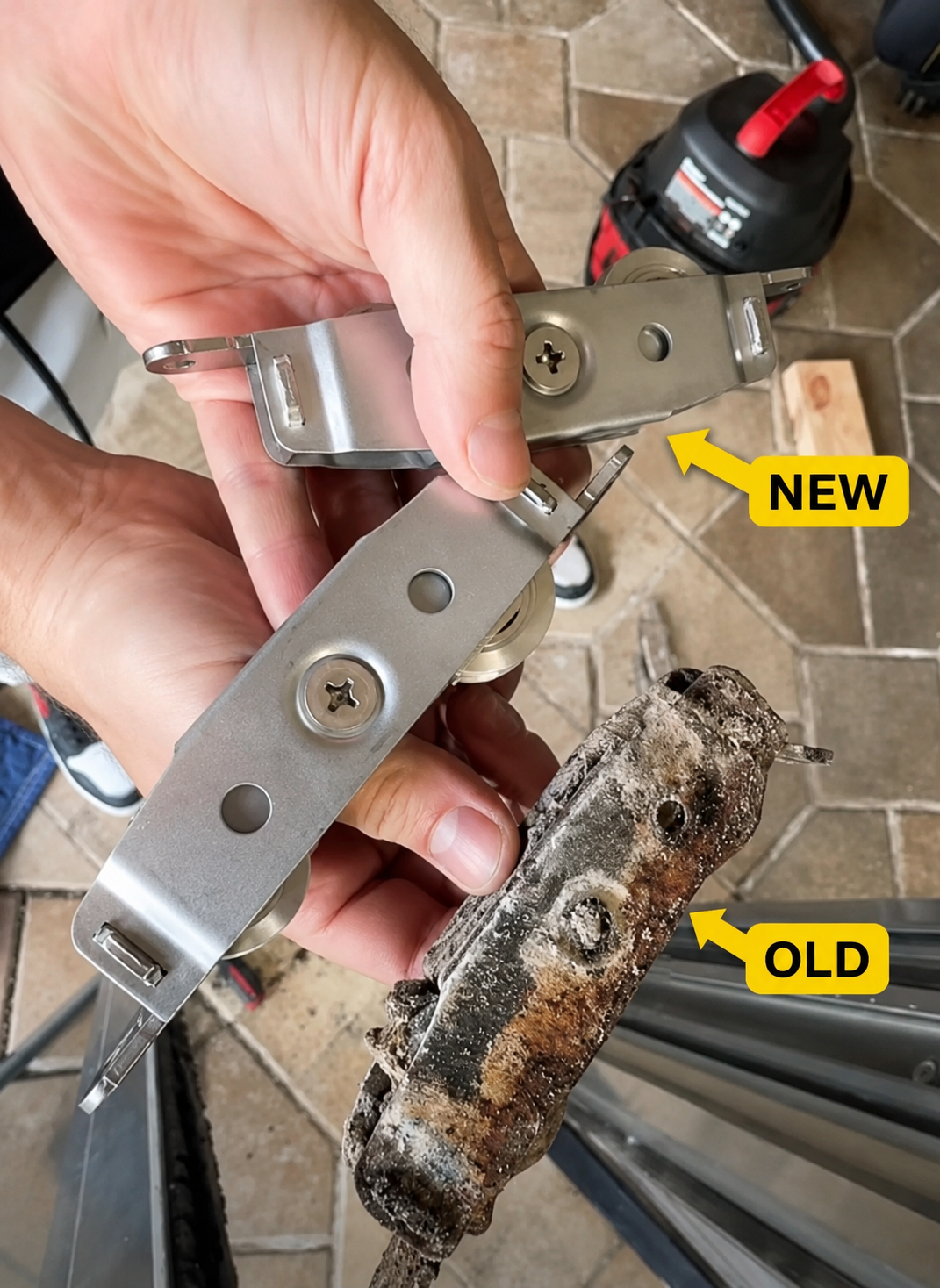
A worn roller may leave the panel marginally supported. Additional seal resistance or a changing clearance then makes normal movement noticeably harder.
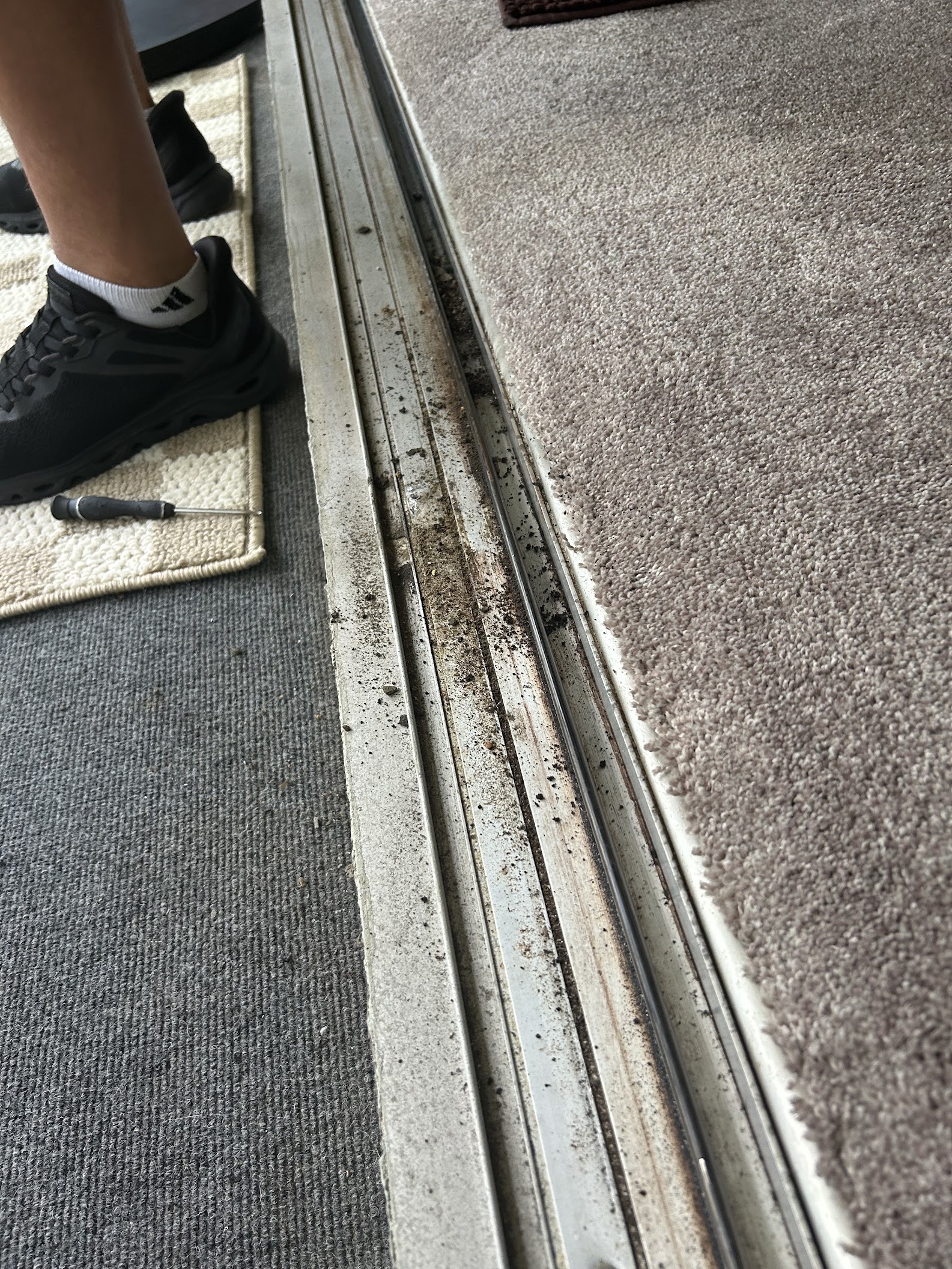
Cleaning can reduce contamination, but it cannot correct a distorted housing or damaged wheel. Likewise, raising a panel without examining its wheels may provide temporary clearance while leaving the underlying failure unresolved.
If the complaint is recurring, request an alignment inspection that also considers hardware, running surfaces and retention.
Avoid a one-season workaround
Grinding the frame, removing weatherstripping or forcing the panel may reduce one symptom while compromising sealing or stability. The repair should account for both normal operating position and the observed environmental pattern.
At a Southside property or another Jacksonville home, provide the timing notes and photos of visible rubbing. A technician arriving during a cooler part of the day may otherwise miss the condition you are describing.
After repair, continue observing the original time-of-day pattern. A single demonstration during mild conditions does not fully evaluate a previously recurring complaint.
Give an intermittent problem a useful timeline
For a stable door, note morning and afternoon behavior over a couple of ordinary days. Record direct sun, the first rubbing location and whether locking changes too. Exact temperatures are optional; a consistent description is more useful than a guessed material diagnosis.
If the technician arrives while the door moves easily, that record explains what the visit needs to investigate. A safe earlier recording can help show the original contact point.
Include recent seal, trim or flooring work. If a thicker seal was installed just before the problem began, the draft-and-weatherstrip article explains why seal contact and panel position should be checked together.
Reference: Marvin care and maintenance guidance. Inspect material, seal and operating condition; a care guide does not prove why an intermittent panel binds.
Heat-and-humidity questions
Is every afternoon sticking problem caused by expansion?
No. Contamination, alignment, rubbing seals and worn hardware can produce a similar pattern or combine with changing clearances.
Should I adjust rollers every time the weather changes?
Repeated adjustment deserves a diagnosis. A sound assembly should not require constant improvisation to remain usable.
Does a door need replacement if humidity affects a wooden part?
Not automatically. Inspect the affected component, finish, support and broader opening before choosing a targeted repair or replacement.
Request an inspection for recurring sticking. Tell Sliding Doors Masters the time-of-day pattern, rubbing location, recent work and ZIP so the complaint can be assessed even when conditions differ during the visit.
Need this looked at on your own door? Get a free estimate or talk it through with our team.
Related service