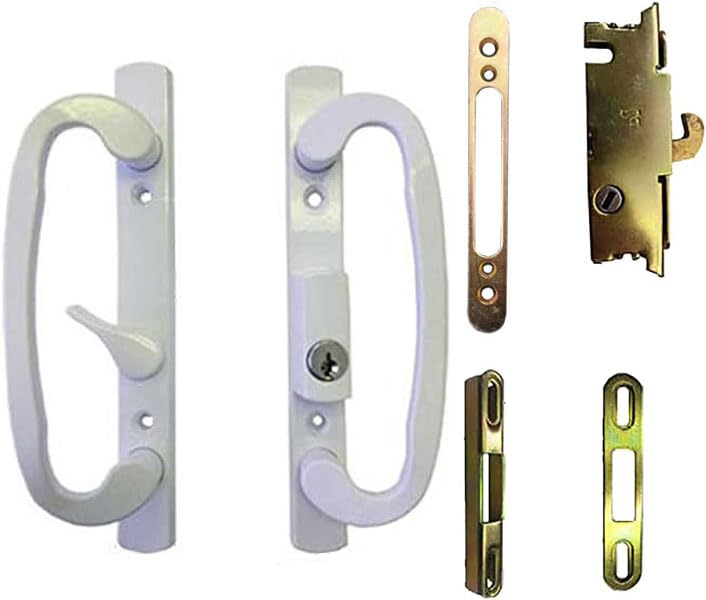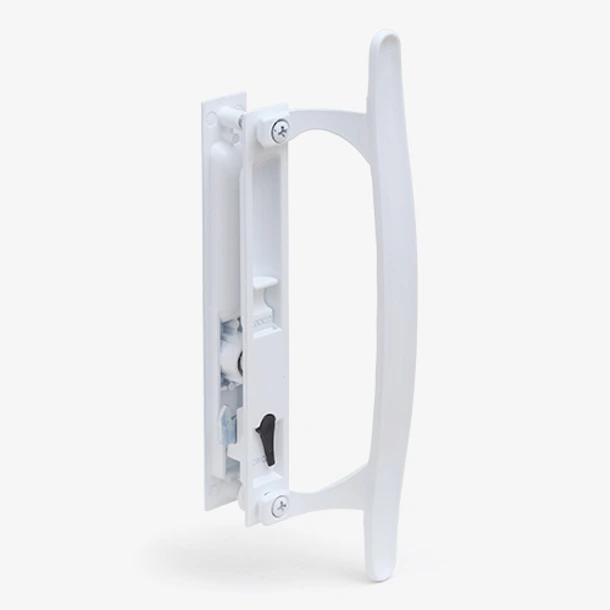
Use Andersen guidance that covers your gliding door's series, vintage and installed hardware. A loose trim handle, damaged internal lock and dragging panel are different concerns. Andersen's hardware documentation distinguishes certain handle sets from lock-and-receiver kits, so verify which component a proposed replacement includes before ordering.
Gather the product details
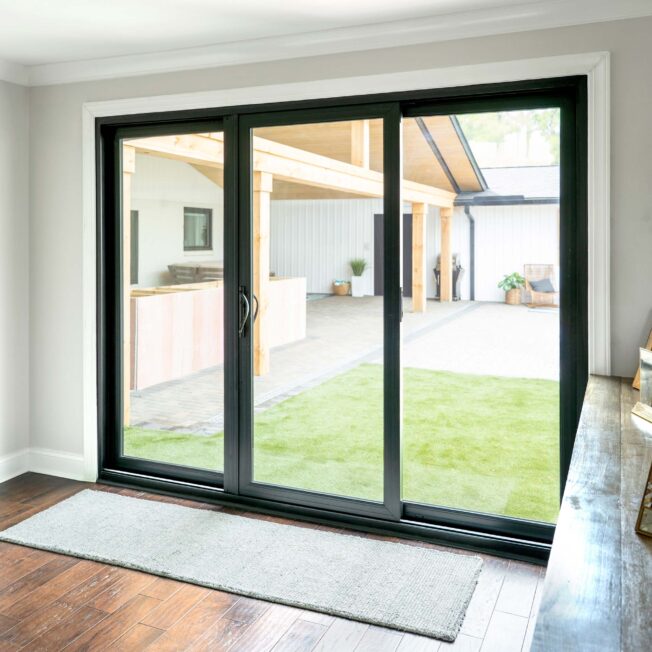
Find safely accessible identifying information and existing paperwork. Photograph the entire door, its panel arrangement and the handle.
If the series or age is uncertain, tell the office. Do not choose a guide merely because its drawing resembles the handle at your home.
The installed hardware deserves attention too. A previous replacement may differ from the original configuration, making current photographs and records more useful than age alone.
Read the maintenance guidance narrowly
Andersen's general hardware-care information describes cleaning before application of compatible dry lubricant. It also directs owners toward product-specific care guides.
That does not mean every visible surface should be sprayed. Confirm the component, permitted formulation and material warnings for the actual application.
Keep abrasive or incompatible products away from finishes and adjacent parts. Cleaning and lubrication cannot rebuild a worn roller or correct a damaged rail.
Separate the pull from the lock
The handle trim may be sold separately from the actual locking mechanism and receiver. A new decorative set can therefore leave a locking failure untouched.
| Complaint | Information needed |
|---|---|
| Pull moves against the panel | Trim, fasteners and mounting condition |
| Lock misses its receiver | Panel position and hardware engagement |
| Thumb turn remains difficult | Mechanism condition and applicable guidance |
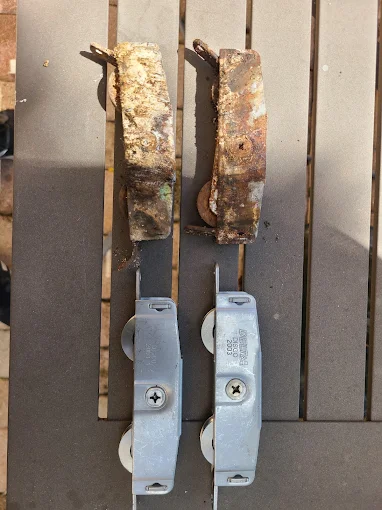
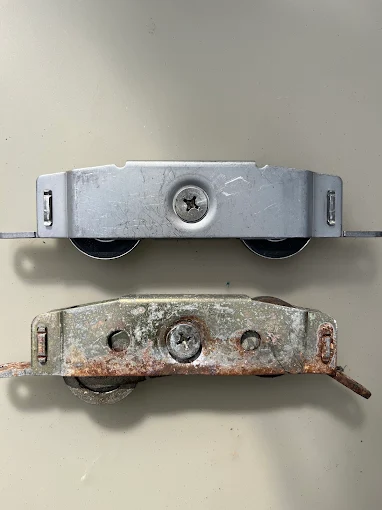
| Panel drags along the bottom | Rolling support, rail and alignment |
| New hardware did not help | What was actually replaced and whether it matched |
Ask the technician to identify the defective component before selecting a complete set.
Adjustment should follow the correct product
Andersen publishes different hardware guidance for different periods and configurations. A method used on one vintage should not be assumed appropriate for another.
A useful inspection confirms the panel's intended position, the condition of its supporting hardware and natural engagement at the jamb. The target is correct operation throughout travel, not simply making one latch catch.
If adjustment repeatedly loses its effect, investigate wear or support rather than turning the same screw again without explanation.
Preserve support and retention
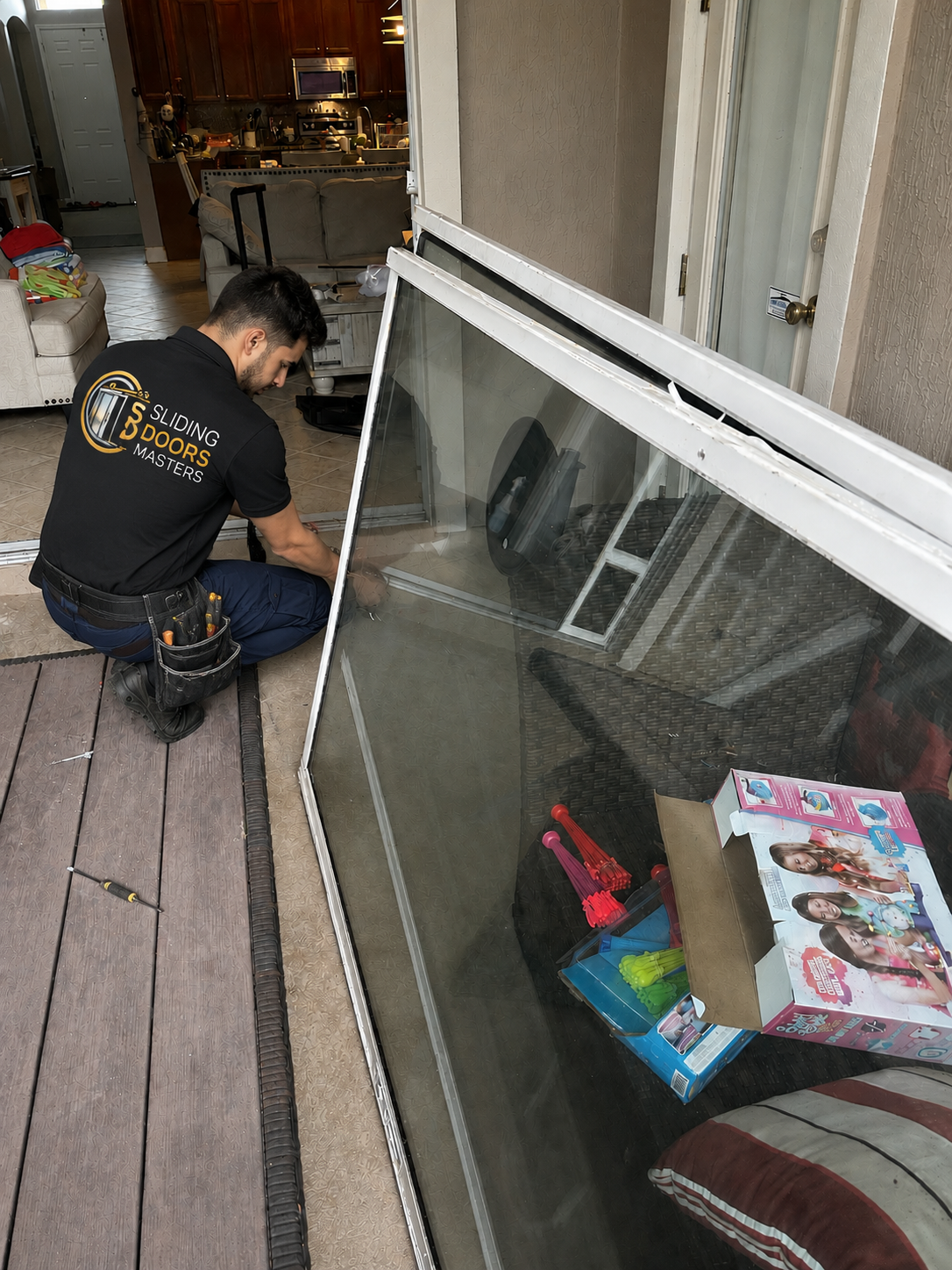
A heavy glazed panel should not be removed by following a generic internet procedure. Panel construction, access and the relevant guide affect safe handling.
Do not remove guides or seals to reduce resistance without understanding their purpose. A part that feels inconvenient may be important to the intended running relationship.
The repair recommendation should explain any necessary additional access and its applicable charge before that inspection step proceeds.
Verify the completed work
Use normal movement through the intended range, then close, lock and unlock the door without lifting or slamming the handle. Confirm that the trim stays secure and no new rubbing appears.
Keep the part description and applicable care guidance. They help future service start from the actual installed components.
For sliding door hardware service in Fleming Island, provide the series, vintage if known and current photographs. This guide does not represent manufacturer authorization or affiliation.
A handle kit and a locking repair can be different purchases
Suppose the pull is sound but the locking mechanism does not engage. Buying trim because it resembles the current handle may leave the failed or misaligned locking parts in place. Conversely, a loose pull can require attachment or trim work while the lock itself remains functional.
Tell the office which action fails and provide safely visible identification. If a prior repair changed the hardware, include the current part record rather than relying only on the door's age.
The lock-engagement article covers the alignment question that can accompany a locking complaint. Use the manufacturer guide for the covered configuration; a similar handle drawing does not establish equivalent instructions.
Reference: Andersen gliding-door hardware guide. Match the hardware guide to series and vintage, and distinguish trim from locking components.
Andersen owner questions
Can I use a guide for a newer door on an older model?
Only if the applicable manufacturer guidance establishes that it covers your configuration. Series and vintage can change parts and procedures.
Does a handle kit solve a failed lock?
Not necessarily. Confirm whether the actual locking components and receiver are included and whether alignment is part of the problem.
What if I cannot identify the series?
Send safely visible markings, the whole opening and handle photos. A technician can plan further identification without asking you to dismantle the panel.
Arrange an Andersen gliding door evaluation. Give Sliding Doors Masters your ZIP, known series or vintage and the action that fails. Ask whether the proposed kit includes trim, locking hardware, the receiver or a combination.
Need this looked at on your own door? Get a free estimate or talk it through with our team.
Related service