Grinding, squealing and rumbling can come from wheels, bearings, a damaged rail, rubbing seals or other contacting components. The pattern is more useful than the sound name alone: does it happen throughout travel, repeat rhythmically or occur at one fixed location? Confirm the physical source before choosing parts or lubricant.
Record the noise during normal movement
If the panel is stable and its glass intact, note the sound without forcing travel. A short video from a safe position can capture movement and audio together.
Describe whether the sound appears across the entire travel, at one fixed location or only near closing. Include changes in effort, panel position and locking.
Stop operating a panel that rocks, leaves its path or scrapes heavily. Collecting a recording is not worth worsening an unstable condition.
Use the pattern to guide inspection
| Sound or pattern | Components worth checking |
|---|---|
| Grinding through much of the travel | Wheel rotation, rail condition and rubbing metal |
| A repeating rumble | Wheel shape, bearing behavior and the running path |
| A sharp noise at one fixed point | A local rail defect, joint or obstruction |
| Squealing near closure | Seal contact, alignment and hardware interaction |
| A click with panel movement | Loose or contacting components and support |
A technician should confirm the physical source rather than order parts from the sound description alone.
Separate moving hardware from fixed defects
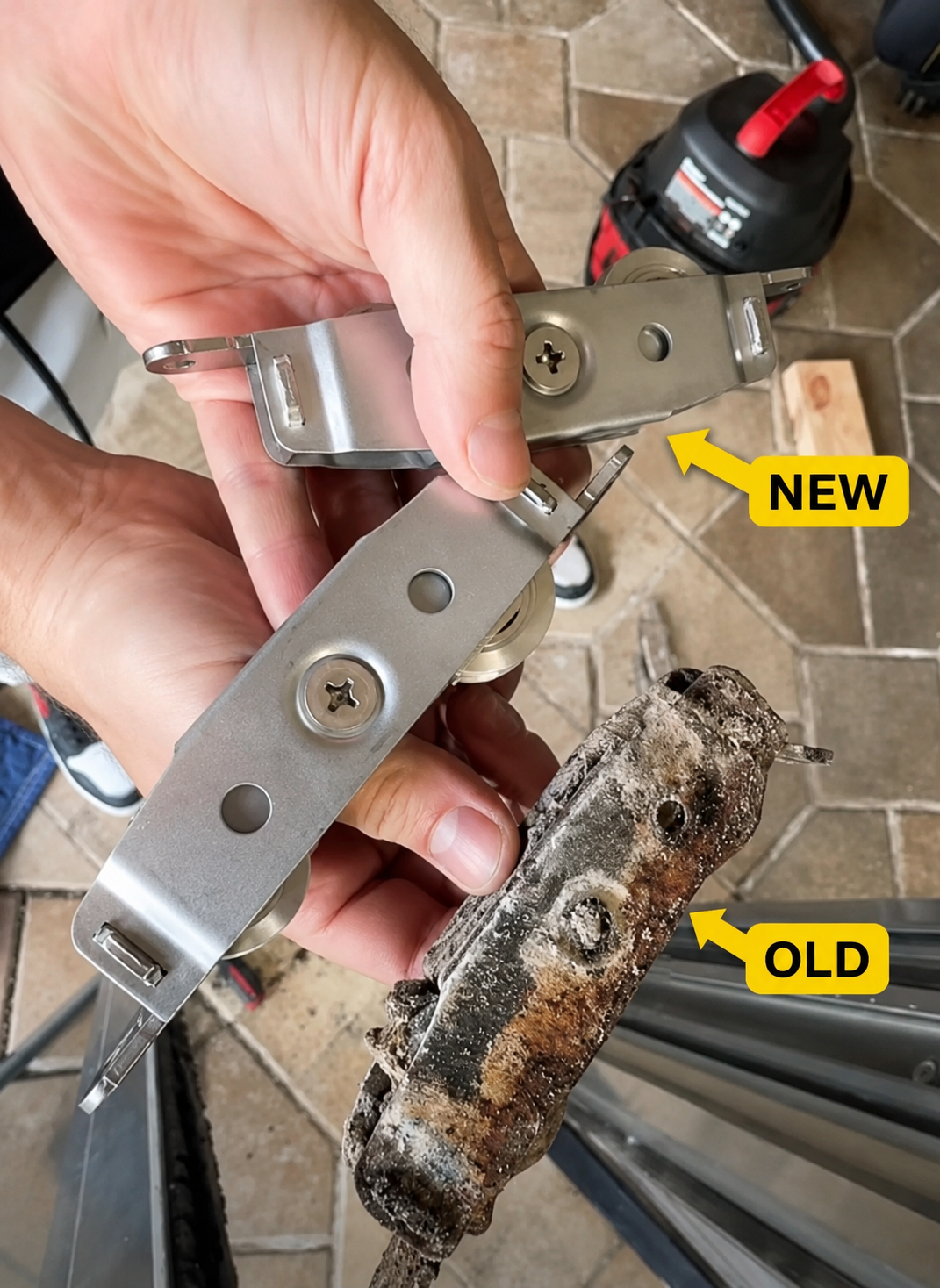
A damaged wheel can produce repeating roughness as it turns. A fixed rail defect tends to affect the panel when its wheels cross that location.
The distinction is useful but not absolute. Several wheels, overlapping panels and resonating frames can make the apparent source misleading.
Mark the location with a photograph rather than applying tape or an object to the running surface. Describe which panel crosses the area and in which direction the sound is strongest.
Cleaning is a useful comparison
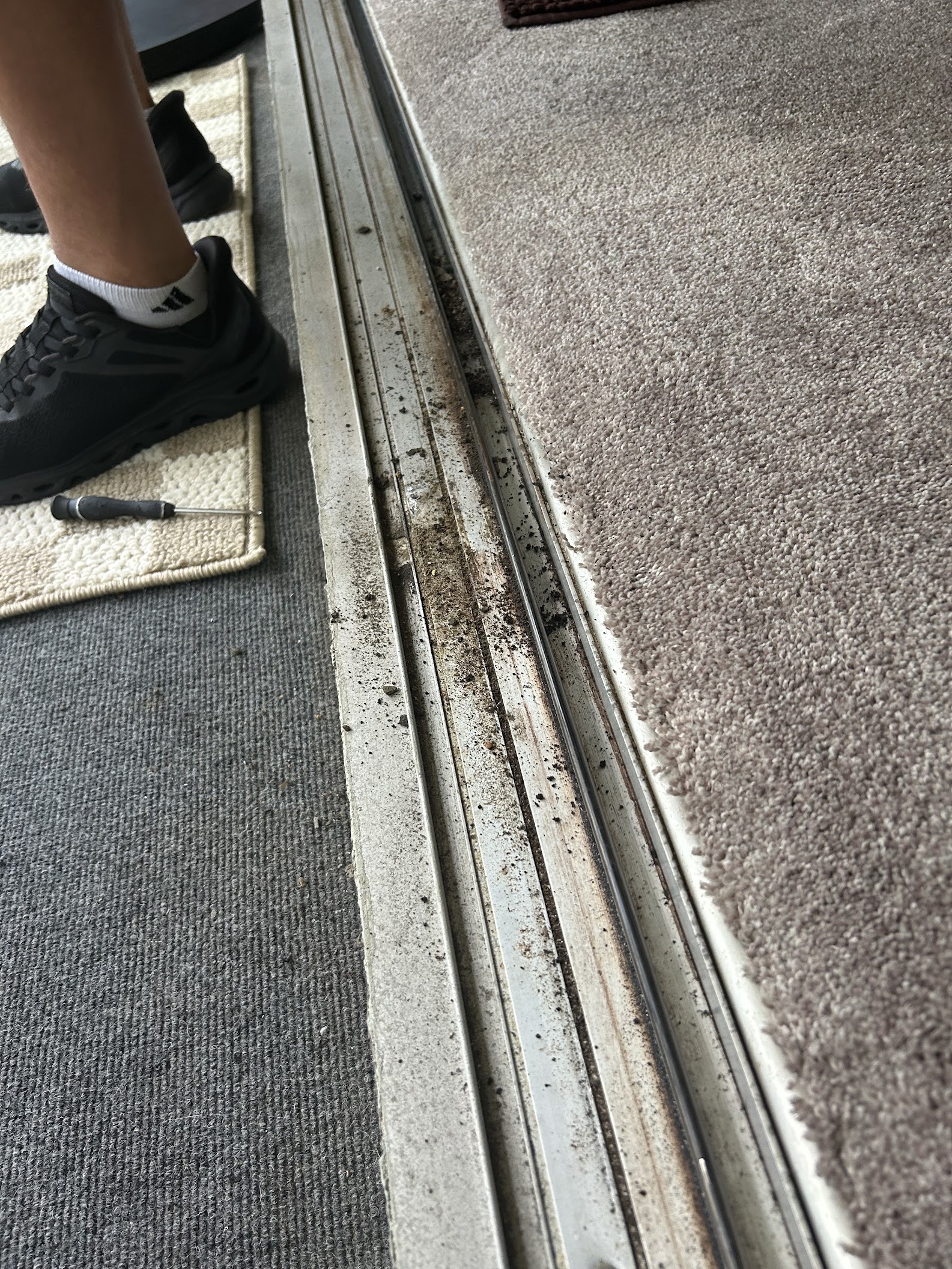
Removing accessible loose debris may change a gritty sound. If the panel remains stable, observe whether ordinary movement improves afterward.
A sound that returns quickly deserves further assessment. A clean rail can still support a damaged wheel, and a healthy wheel can still cross a dented ridge.
Fine debris that rapidly reappears is also worth recording. It may reflect ordinary contamination, but mechanical contact can contribute.
Do not judge a repair by silence alone
Lubricant can temporarily reduce a noise without correcting damaged support or a worn running surface. The absence of squealing does not establish suitable alignment or secure locking.
The completed result should include natural movement, stability and correct closing relationships. If the original symptom occurred only near one end, test that portion of normal travel too.
Ask what physical finding supports the recommendation. “It sounded bad” is less useful than showing a damaged wheel or a defined rubbing location.
For track inspection in Baymeadows, include a safe recording and the point where the sound occurs. Mention any recent roller, seal or handle work.
Record where the sound happens, not just how it sounds
For a stable, intact panel, a short safe clip showing the opening and ordinary movement can be more useful than audio recorded close to a hidden wheel. Say which panel is moving, the direction and the point where the noise occurs.
Do not perform extra forceful cycles to obtain a clearer recording. If the sound accompanies rocking or severe scraping, describe it and stop use.
A repeating wheel-related noise and a catch at a fixed rail defect can be confused when frames carry sound. The fixed-bump article explains how to describe that location. An inspection should connect the audible symptom to a visible or measurable finding.
Reference: Truth end-adjust tandem roller specifications. The specified bearing design is one hardware example, not a sound-based diagnosis for an unknown door.
Noise questions
Does squealing always mean the door needs lubricant?
No. Rubbing seals, alignment problems or damaged components can also create noise. Identify the source and follow product-specific maintenance guidance.
Is grinding always caused by rust?
No. A seized wheel, debris, dragging panel or damaged rail can produce grinding without visible rust.
What should I do if the sound disappears before the appointment?
Share the recording and note the conditions when it occurred. Intermittent symptoms still provide useful history, especially if effort or locking changed.
Request a noise and movement inspection with Sliding Doors Masters. Include your ZIP, when the sound occurs and whether effort or locking changed too. Share an existing safe recording through a channel the office confirms.
Need this looked at on your own door? Get a free estimate or talk it through with our team.
Related service